
Cardinal Parolin: Pontifical Ecclesiastical Academy offers paths of peace for the world
Vatican News
In an interview with Vatican Media marking the 325th anniversary of the foundation of the Pontifical Ecclesiastical Academy, Cardinal Pietro Parolin said the institution is called today to help chart “concrete paths of peace, made up of principles, rules, and structures that guarantee order among nations,” especially amid the present crisis of the international order.
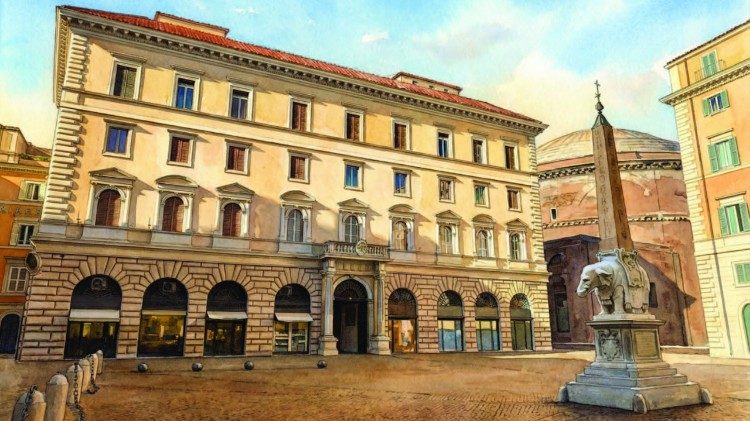
The Cardinal Secretary of State's observations come as the Academy prepares to welcome Pope Leo XIV on Monday afternoon at its headquarters in Piazza della Minerva - his first visit there since his election.
Forming pontifical diplomats
Cardinal Parolin described the Academy as an institution that unites history and renewal, noting that while it forms part of the Secretariat of State, it is also entrusted with preparing those who represent the Successor of Peter throughout the world.
Pontifical diplomats, he said, must be capable of assessing situations with clarity, engaging in dialogue, and discerning the needs of peoples and nations.
“They need that missionary zeal which makes them authentic and well-prepared witnesses to the Pope’s solicitude for the local Churches and the People of God,” he said.
Beyond soft power
Reflecting on the Academy’s mission, Cardinal Parolin noted that its educational work is “essentially ecclesial,” since the Holy See’s diplomatic action extends far beyond simple soft power.
The Academy, he said, prepares future diplomats to interpret international developments in light of the Church’s social doctrine and to engage the structures of the international community with sound discernment.
Students are formed not only in academic excellence, but also in priestly virtues such as listening, dialogue, humility, and closeness to others.
Reform under Pope Francis
Cardinal Parolin also recalled Pope Francis’ reform of the Academy through the Chirograph Il Ministero Petrino, describing it as a significant renewal of the institution’s mission and structure.
He noted that Pope Francis once described Vatican diplomats as “priests with suitcases in hand,” underscoring the pastoral and evangelising character of their service.
Under the reform, the Academy has been restructured as an Institute of Higher Formation in Diplomatic Sciences and now grants Licentiate and Doctoral degrees.
Responding to the crisis of diplomacy
Addressing the current state of international diplomacy, Cardinal Parolin acknowledged widespread concern over diplomacy’s limited ability to prevent or resolve conflicts.
He said the Academy’s response is to offer a renewed formation in diplomatic sciences, including legal, historical, political, and economic studies, integrated with ecclesiastical disciplines and the Church’s evangelising mission.
However, he stressed that technical preparation alone is insufficient.
“A diplomat is called first to bear witness and only then to negotiate,” he said.
The Cardinal concluded that the crisis of the international order—marked by renewed recourse to force and disregard for international law—can be addressed only by “charting concrete paths of peace.”
“That,” he said, “is the task entrusted today to the Pontifical Ecclesiastical Academy, 325 years after its foundation.”
Thank you for reading our article. You can keep up-to-date by subscribing to our daily newsletter. Just click here.


