
Jubilee Holy Doors sealed but ‘Christ’s heart is always open’
By Eugenio Bonanata
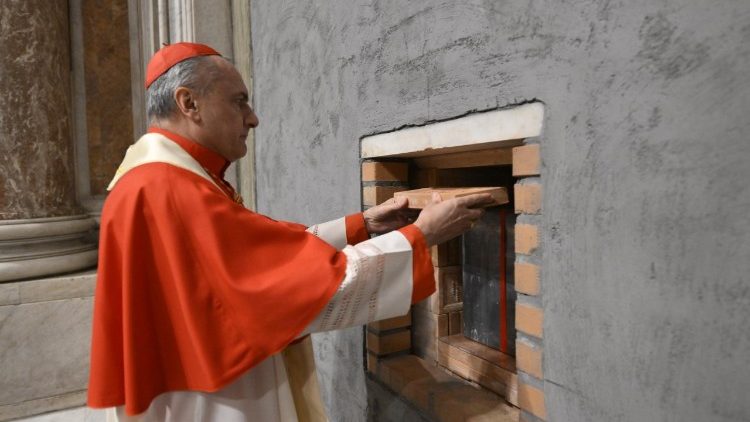
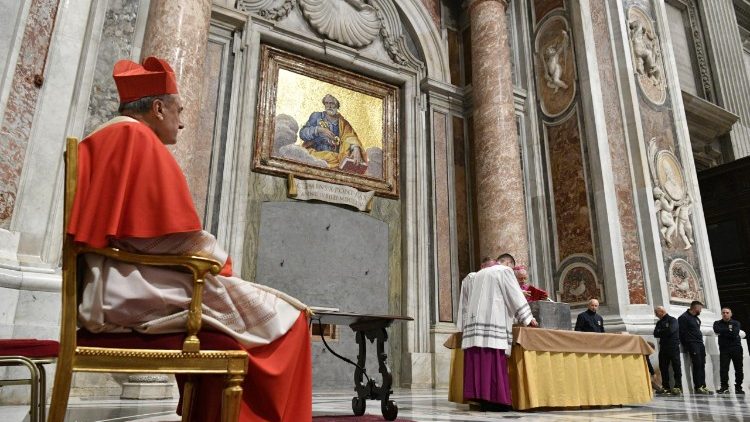
On Friday, January 16, Cardinal Mauro Gambetti, Archpriest of St. Peter’s Basilica, and Archbishop Diego Giovanni Ravelli, Master of Pontifical Liturgical Celebrations, presided over a solemn rite to seal the Holy Door of the Vatican Basilica.
They prayed for the millions of pilgrims who passed through them during the 2025 Jubilee of Hope in order to receive God’s grace and a plenary indulgence.
Speaking to Vatican News, Msgr. Orazio Pepe, Secretary of the Fabric of Saint Peter, described the rite, which followed Pope Leo XIV’s closing of the Holy Door on January 6, 2026.
Q: The Holy Door of Saint Peter’s Basilica has been walled up: what is the meaning and value of this moment?
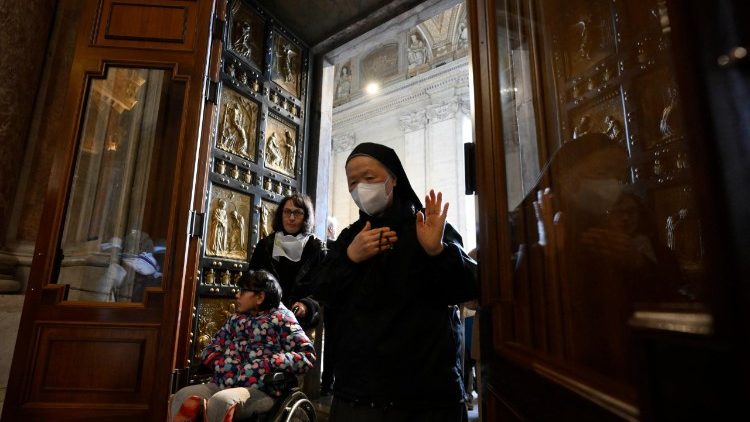
This moment is special because it is, in fact, the final act in the closing of the Holy Year: the walling-up of the Holy Door, from the inside the Basilica. The external door—the bronze one—was already closed by the Holy Father on January 6.
Now, this represents a second moment: the walling-up from within the Basilica.
The rite is not only technical; it is also a moment of prayer, because we must remember that the Holy Door, with all its symbolism, is also a spiritual reality—a place where the faithful have an experience of God, even by passing through this door. So it is very important.
Q: Staying with the operational side: technically, a wall is built. Is that right?
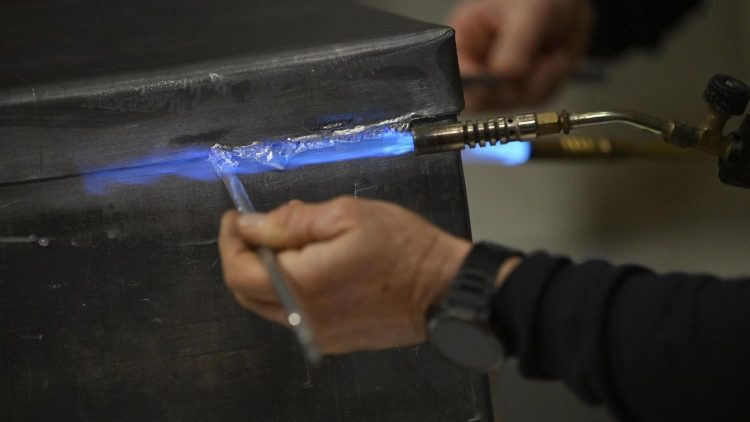
The wall is actually double. A first dry wall consists of bricks bearing the Jubilee Year and the logo of the Fabric of St. Peter. There are about 3,200 bricks.
So, a first dry wall is made, close up against—so to speak—the bronze door. Then there is a second masonry wall, which has already been built in recent days, and at the center of this wall there is a small recess where a box is placed at the moment of the definitive closing of the ceremony.
It is a wall of bricks—620 solid bricks—laid with lime mortar by our sampietrini. The box is sealed into the wall.
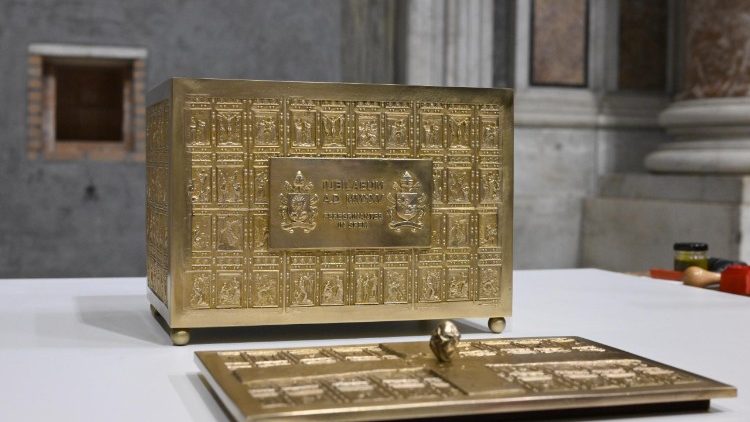
The box contains: the keys to the bronze door; the closing deed; the medals of the current pontificate; rosaries blessed by the Pope; some coins and medals from this pontificate; and also four gilded bricks which the Basilica, through the Archpriest, consigns to history and which will be taken out again at the reopening of the next Jubilee.
Q: How does the rite take place?
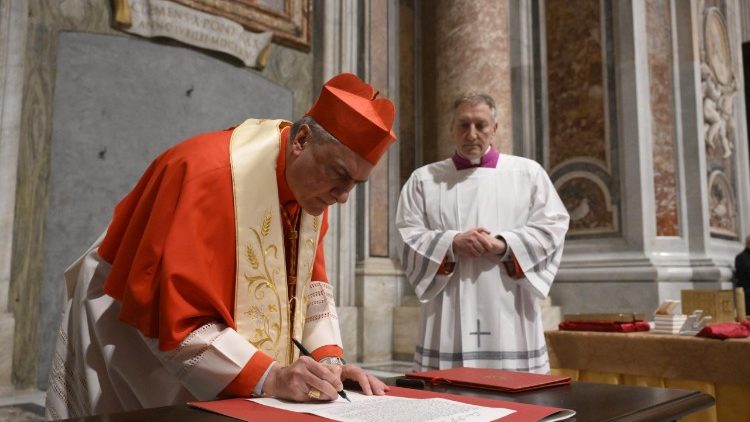
The rite is very simple. It is conducted by the Office for the Liturgical Celebrations of the Supreme Pontiff.
So, there is a moment of prayer presided over by the Cardinal Archpriest, in the presence of the Master of Papal Ceremonies, Archbishop Ravelli, and then the other ceremonial officials who conduct the celebration.
It is very simple: there is a prayer, an invocation, always with reference to the meaning of the door and the grace of God that passes through this place.
Then this box—made of wood and lead—is walled up; it is sealed with the items I mentioned earlier, and it is placed into this section of the wall that is now open—in this recess—which will be reopened when the next Jubilee takes place.
Q: How did you prepare for this occasion?
We prepared as we do for all the Basilica’s spiritual occasions: always with a joyful heart and with great attention to the signs and meanings that this celebration carries with it.
Q: As we mentioned, this celebration also involves the work of the so-called sampietrini—the craftsmen (carpenters, cabinetmakers, electricians). These are people who, with discretion and utmost care, accompany key moments in the history of the Church. What do they feel on an occasion like this walling-up of the Holy Door?
They are very absorbed by this solemn moment, even if it is somewhat private, if you like, because it is part of the Basilica’s history.
We also have many photographs from the past in which these sampietrini offered their skill and craftsmanship at the closing of the Holy Door. They experience it with great emotion and spiritual fervor.
Q: Msgr. Pepe, what did this Jubilee Year mean for the Fabric of St. Peter?
For the Fabric and for the whole Basilica—because the two realities are in fact united—it meant above all welcoming all the people who came.
They were several million, and the welcome had to express God’s welcome for those who want to make a passage of definitive conversion in their lives, to live as Christians.
So the Basilica prepared for this: the canons, the other priests, the penitentiaries, everyone who in some way works or carries out apostolic service in the Basilica dedicated themselves to this purpose.
Q: What is the legacy of the Holy Year for St. Peter’s Basilica?
The legacy is that, if on the one hand a door is closed, on the other hand the door is always open.
The flow of pilgrims will certainly decrease, but there are always many people who come to the tomb of St. Peter—as a place of pilgrimage, as a shrine, as a powerful moment in their lives.
This year, we also saw a notable increase in pilgrims who came on foot: there were truly many, and the numbers rose greatly compared to the past. So, there is this desire to walk toward God and to reach places where it is possible to have an experience of God, as in St. Peter’s Basilica.
Q: Picking up on what you said: the Pope said that the Holy Door is closed, but that the door of Christ’s heart always remains open. What is your hope in this regard?
My hope is that all the faithful who will continue to come to St. Peter’s may find in us a readiness to welcome them in all the spiritual needs they carry in their hearts and that they feel are important for their lives.
Thank you for reading our article. You can keep up-to-date by subscribing to our daily newsletter. Just click here.


