
Cardinal Parolin: May we not forget the victims of the conflict in Cabo Delgado
By Andrea Tornielli
Cabo Delgado risks falling into the category of “forgotten conflicts," Cardinal Secretary of State Pietro Parolin says in the following interview with Vatican media that he gave after returning in recent days from a visit to Mozambique.
Your Eminence, can you tell us what reality you encountered, what difficulties the country is experiencing, and what signs of hope you found?
My visit to Mozambique from 5 to 10 December brought back the feelings of joy and the emotions of the Apostolic Visit with Pope Francis in September 2019. Certainly, six years later, many things have changed. What has not changed is the people’s hospitality. It is the charm of Africa, which strikes one immediately!
The trip had three purposes: the celebration of the 30th anniversary of diplomatic relations between the Holy See and Mozambique; the closing of the National Youth Day; and the visit to Cabo Delgado. The commemorative reception for the 30 years of diplomatic relations took place on 5 December at the Apostolic Nunciature in Maputo. The presence of the President of the Republic, H.E. Mr. Daniel Francisco Chapo, the former President Joaquim Chissano, and representatives of both the Government and the Opposition gave me the opportunity to recall that Mozambique needs peace.
After a period of serious social unrest and violence following the most recent general elections, the country has returned to calm. However, in order to strengthen peaceful coexistence and promote institutional reforms, a process of “inclusive national dialogue” has been launched. I hope it will be successful, also in order to give hope to young people, who constitute the majority of the country and whose enthusiasm I was able to experience during the closing Mass of the National Youth Day.
You were able to visit, in the province of Cabo Delgado, communities of displaced persons who are victims of the jihadist insurgency that has affected northern Mozambique since 2017. What situation did you find, and in what conditions are they living?
I devoted two days to visiting Cabo Delgado to express the closeness and solidarity of the universal Church and of the Holy Father to a population suffering from jihadist terrorist violence. The attacks by armed groups, which from the second half of 2023 have spread throughout the entire province of Cabo Delgado, have also reached the provinces of Nampula and Niassa. On 6 September 2022 Italian Comboni missionary Sister Maria De Coppi was killed at the Chipene mission, in the Diocese of Nacala and the Province of Nampula.
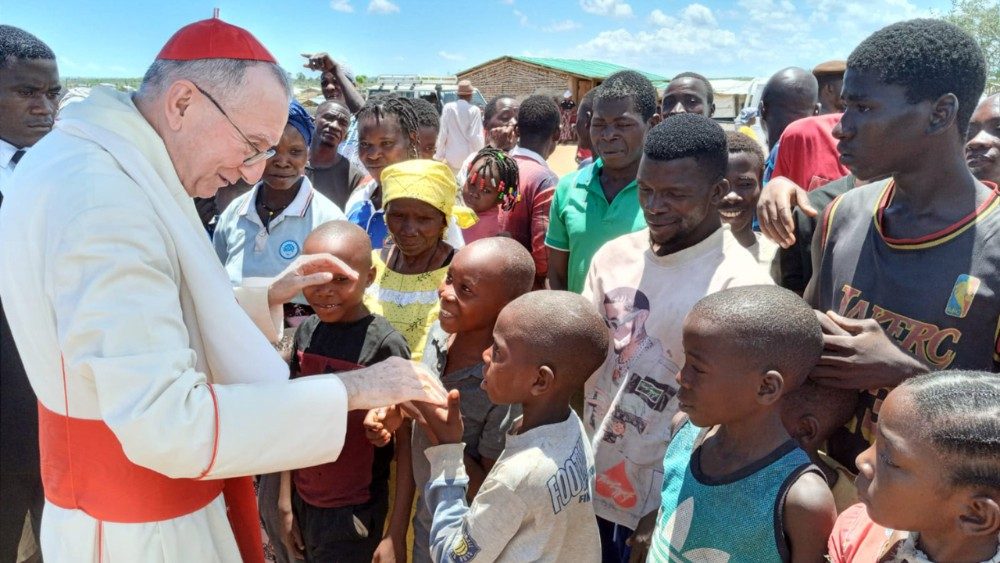
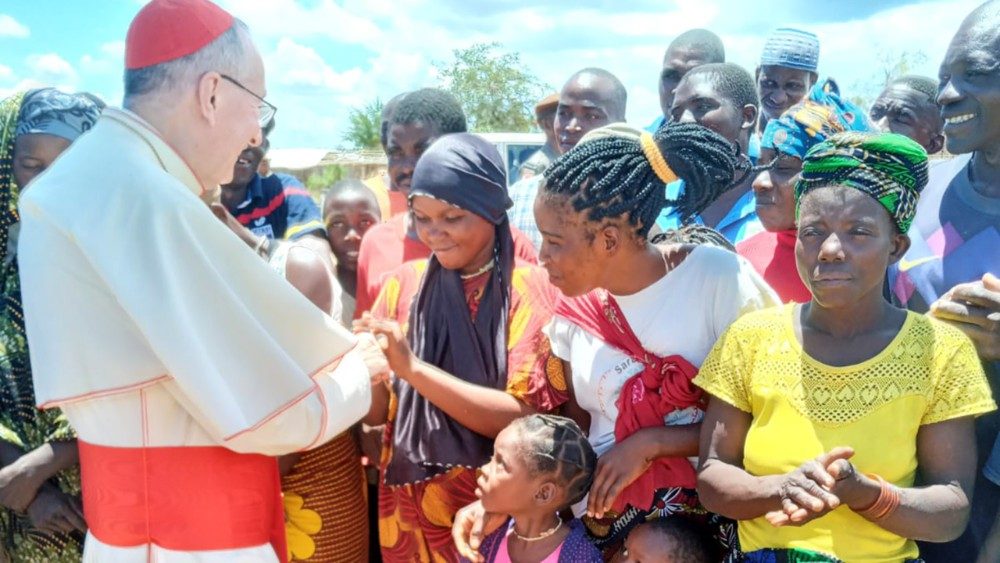
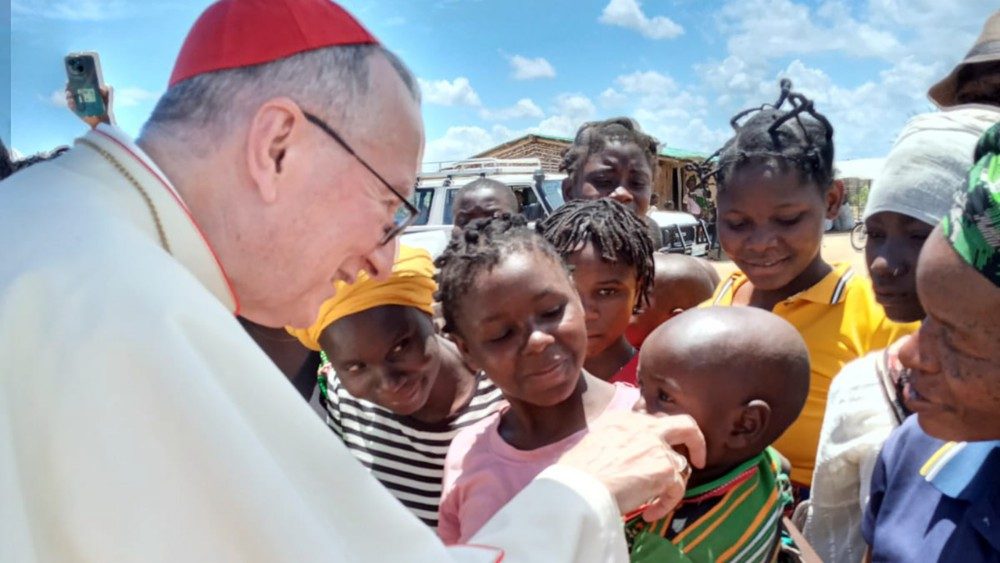
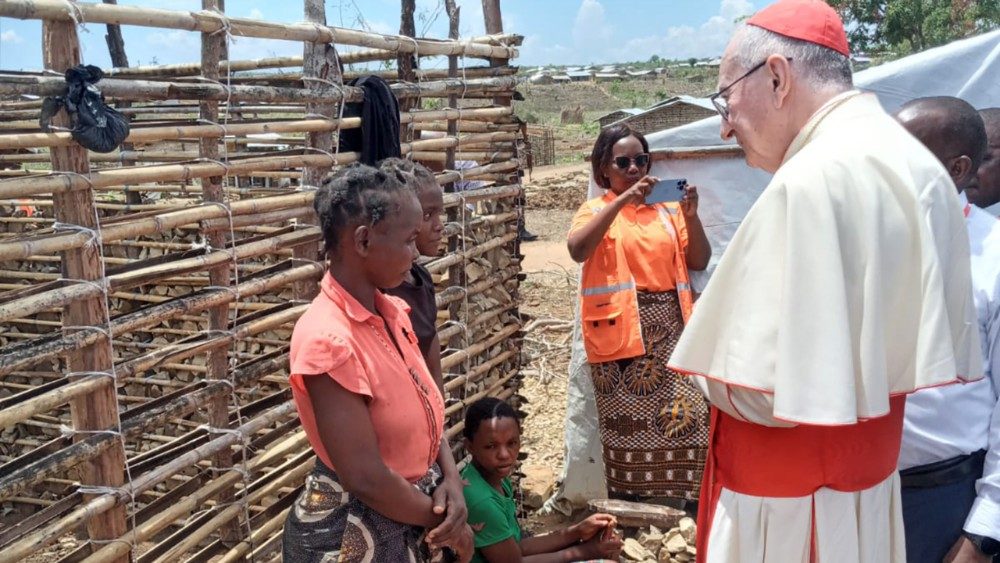
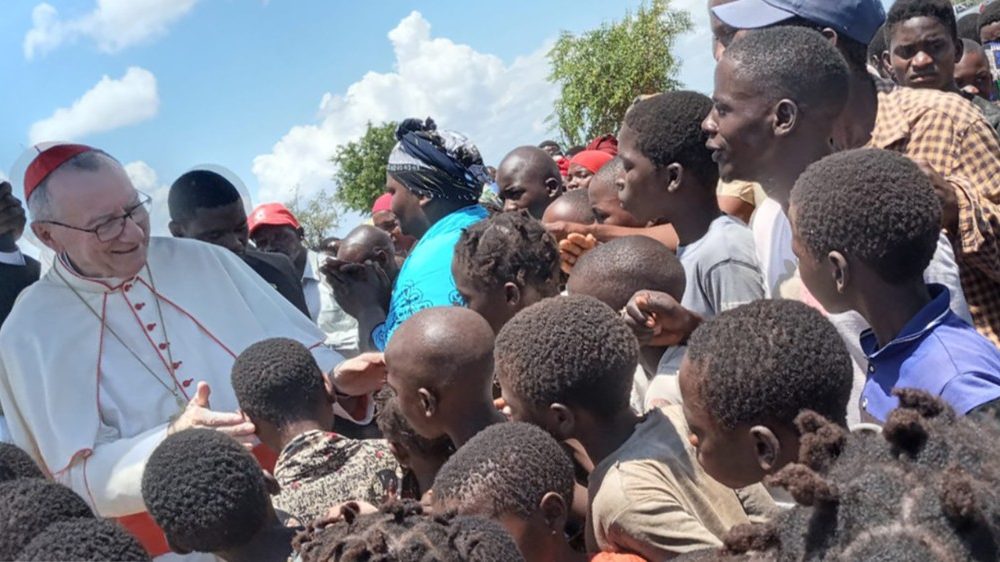
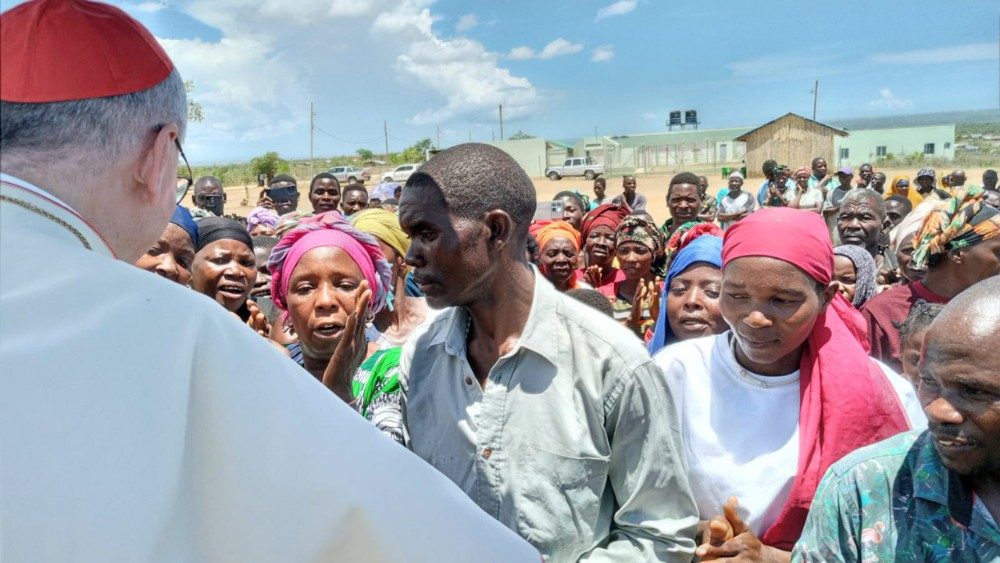
This conflict has caused a very large number of displaced persons, estimated at around 765,000 people by the end of 2023. There are several camps of displaced people throughout the province. Some displaced people have been taken in by local families. On 9 December I visited the Naminawe camp, which hosts about 9,200 people, including nearly 3,700 children, and more continue to arrive. They live in truly difficult conditions. Despite the support of some charitable organizations, they suffer from a lack of food, medicines, and even drinking water. And as if that were not enough, Cyclone Chido, which struck the area in December of last year, severely damaged homes built with fragile materials.
The children in that camp, like the hundreds of thousands in other camps scattered throughout the region, risk losing their future because they do not have sufficient access to education. Young people feel trapped, as if in an open-air prison, because without means of transport they cannot leave to find small jobs in nearby cities. It was a very painful experience. So much suffering, so much sadness, and so many unanswered questions emerged from those faces.
From the province of Cabo Delgado, on the border with Tanzania, the conflict has moved south, also affecting the province of Nampula. According to the UN Office for the Coordination of Humanitarian Affairs (OCHA), more than 100,000 people have fled their homes in recent weeks, bringing the number of displaced persons in the last four months to over 330,000. There is talk of killings of those who do not convert to Islam. What are the causes of this tragedy?
Signs of radicalization began to emerge in some areas of the province of Cabo Delgado before 2017, due to the activity of certain Islamists coming from Tanzania or passing through that country. The violence, which began that year, worsened further from 2020 onwards. The armed groups, composed mainly of adolescents and young people and grouped under Ahlu Sunna Wa Jama (ASWJ), associated with the Islamic State, are inspired by jihadist ideology and dream of establishing a Caliphate. There have been, and continue to be, episodes involving the killing of Christians.
Although the root causes of the conflict are numerous and complex, we cannot forget that religion is unfortunately being abused today by some. I say unfortunately because for centuries the different religions, in particular Christianity and Islam, coexisted in Mozambique in peace, harmony, and mutual respect. Today in Cabo Delgado, terrorists exploit poverty, unemployment, widespread resentment over the exploitation of vast local resources that bring no visible benefits to the local population, ethnic and political tensions, and so on, in order to attract young people.
The local Muslim population, which constitutes the majority in the province of Cabo Delgado, has opposed the instrumentalization of religion, but within it there are growing sympathies for the jihadist movement. Mosques are gradually undergoing a process of radicalization. The population, especially Christians and also moderate Muslims, live in fear and pain. Some of our Catholic faithful have faced death without renouncing their faith in Jesus Christ, crucified and risen.
What is the Church doing to help the population?
The testimonies of pastoral workers from the Diocese of Pemba (Cabo Delgado) deeply moved me. Some priests, forced to leave their parishes, continue to accompany their flock as “displaced shepherds.” Religious communities living in situations of insecurity, instead of fleeing, have opened their doors to those who are worse off than themselves. The local Church has not abandoned the suffering people, and I thanked it sincerely for this witness.
There is also extensive humanitarian action to address the many emergencies resulting from the situation. The Church collaborates with other United Nations organizations and civil society groups to ensure that displaced persons receive what they need: food, clothing, and safe shelter. The concrete and efficient service of the diocesan Caritas of Pemba deserves appreciation and support. Furthermore, efforts are being made to promote peace and socio-religious harmony. In Pemba, I took part in a brief interreligious meeting organized by the Diocese, with the participation of Muslim representatives and members of other denominations.
What can we do?
The first thing to do is not to forget our brothers and sisters in Cabo Delgado. It is true that the international community, and specifically the Southern African Development Community (SADC), has sent a military mission which, together with the presence of Rwandan forces, has been able to restore a certain level of security in some cities, such as Pemba and Palma. However, I have the impression that the conflict in Cabo Delgado also risks falling into the category of “forgotten conflicts.”
In this sense, I spoke out several times during the visit, and I hope that it, as well as these words of mine, will contribute to greater attention and involvement by the world regarding this conflict. As Christians, we have at our disposal the “arms” of prayer and fraternal charity. Praying and supporting assistance activities for the displaced people of Cabo Delgado will not only help them feel less alone, but will also be for us a way of living Christmas well. May the Prince of Peace, born in Bethlehem, bring peace to that beloved land of Mozambique.
Thank you for reading our article. You can keep up-to-date by subscribing to our daily newsletter. Just click here.


