Pope Leo's appeal to human traffickers and our shared responsibility
Andrea Tornielli
“Stop! Repent!”
Pope Leo’s cry from the Plaza del Cristo de La Laguna in Tenerife brings to mind the powerful appeal for the conversion of the Mafia made by Saint John Paul II at the conclusion of Mass in the Valley of the Temples in Agrigento on 9 May 1993. The Polish Pope addressed members of Cosa Nostra; his third successor has addressed human traffickers who deceive, enslave, and subject migrants seeking a future to every form of abuse and violence.
After listening to some of the migrants' stories, Pope Leo XIV grounded the strongest passages of his appeal in Sacred Scripture. “Stop! Repent!” echoes the call to conversion proclaimed by Jesus in the Gospel of Mark. Likewise, the words, “The tears and blood of these brothers and sisters cry out to God, and their suffering reaches Him,” recall God’s response to Cain’s murder of Abel in the Book of Genesis, as well as God’s hearing of the suffering of His people in the Book of Exodus.
The Successor of Peter, who in the final two days of his journey to Spain—with stops in Gran Canaria and Tenerife—fulfilled a visit that Pope Francis had long desired to make, and issued a warning: the money taken from these poor brothers and sisters will bring neither peace, nor honour, nor a future. Addressing human traffickers, and drawing on Saint Paul’s Second Letter to the Corinthians, he warned that for every life lost, every family deceived, every body subjected to exploitation, every woman threatened, and every worker abused, “you will have to appear before divine justice.” He urged them to free those they hold in bondage, recalling that God’s mercy is offered even to the most hardened sinner who exploits the vulnerability of women, children, and men—but only “through the narrow gate of truth, justice, and conversion,” as the Book of the Prophet Ezekiel teaches.
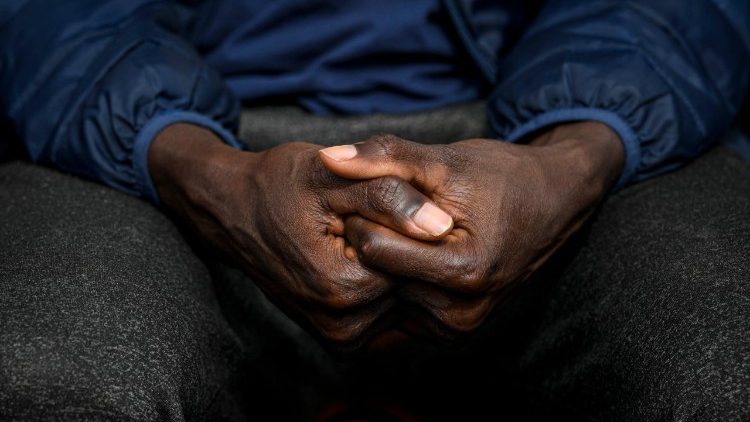
While the most forceful and prophetic aspect of the Pope’s message was undoubtedly his appeal for the conversion of human traffickers, the other words he spoke during the two days he spent in the Canary Islands should not be overlooked. At the port of Arguineguín, in Las Palmas de Gran Canaria, the Pope bowed before the dignity of migrants, reminding those present that they are not “numbers or files,” but “people who have left behind families and homes. You have dreams that no one has the right to despise.” He stated clearly that their lives “must be protected.”
Pope Leo also appealed to the conscience "of the nations of origin of the migrants, which must establish conditions for peace, justice and development. It is also an appeal to the conscience of the transit nations, which are called to protect the vulnerable and not leave them in the hands of criminal networks. It is likewise an appeal to the conscience of Europe, which cannot claim to uphold human dignity while growing accustomed to the Mediterranean and the Atlantic becoming unmarked graves, as well as that of the international community, which is called to effective and persevering cooperation.” Nor were his words lacking for the Church itself, which “must allow itself to be challenged,” because “welcoming migrants cannot be a secondary matter that is left to a few volunteers.” One cannot kneel before the altar to adore Christ in the Eucharist and then pass by indifferent to the suffering of these brothers and sisters of ours.
At the port of Arguineguín, while calling for “legal and safe pathways, rescue and assistance, real cooperation against traffickers, effective protection for victims, serious processes of reception and integration, and policies that allow every person to live with dignity in their own land,” the Bishop of Rome also invited everyone—civil authorities, parliaments, governments, international organisations, and Christian communities—to ask a profound question, one that could be described as “structural”: “What kind of world have we built, if so many brothers and sisters must risk death to seek life?”
The visit to the Canary Islands marks a milestone in this pontificate. As Francis did before him in Lesbos, Leo wished to recall the Family of Nazareth—Jesus, Mary, and Joseph—forced to flee into Egypt in order to save the life of the Son of God from Herod’s wrath. That family, the Holy Family, “remains for all time the model and refuge of every refugee family, every migrant, and every person compelled to leave his or her homeland because of fear, persecution, or necessity,” the Pope recalled, citing Pius XII’s Apostolic Constitution Exsul Familia. Christians cannot forget that their God made man was a migrant and a refugee. For this reason, they are called to recognise His face in the faces of the brothers and sisters who knock at the doors of our countries in search of a future.
Thank you for reading our article. You can keep up-to-date by subscribing to our daily newsletter. Just click here.