Against the logic of war: History and hope define Realism as "Peace"
By Francesca Merlo
As the world enters a new year marked by deepening fractures and multiplying wars, Pope Leo XIV's Message for the World Day of Peace arrives not as a distant appeal, but as a direct challenge to the way the international community understands security itself.
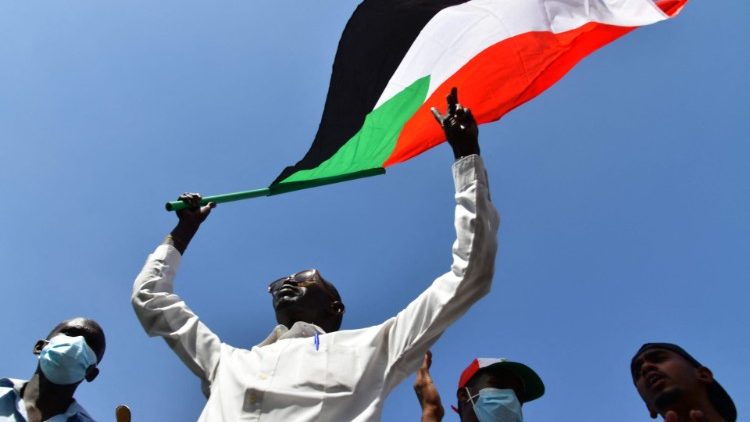
Global conflicts are now at their highest level since the Second World War. From Sudan, where more than twelve million people have been forced to flee their homes, to Gaza, where entire neighbourhoods have been reduced to rubble and famine was declared only months ago, violence has become a near-constant backdrop to global life. Even recent ceasefires, welcome as they are, remain fragile pauses rather than lasting solutions.
What the Pope says is "absolutely vital,” says Neil Thorns, Director of Advocacy at the Catholic Agency for Overseas Development (CAFOD). “And it must be listened to as we go into 2026.”
At the heart of the message is Pope Leo’s call for what he describes as an “unarmed and disarming peace,” a direct challenge to a vision of security built on fear, deterrence, and the accumulation of weapons. It is a critique that cuts against the grain of modern international politics—yet one that Thorns insists should not be difficult to accept.
“He uses some really beautiful, but also very incisive language,” Thorns reflects. “He talks about how we’ve lost our sense of realism.”
Real Realism
The Pope, questioning the sense of the word "realism" as we know it today, is not rhetorical.
According to Thorns, true realism is not the acceptance of endless war, but the belief that peace is possible. “It means believing that caring for our brothers and sisters around the world—and seeing the good in them—is possible.”
What has come to be labelled as “realistic,” he warns, is in fact deeply troubling. “What we’ve accepted as realism is actually devoid of hope. It’s blind to the beauty of others, and forgetful of God’s grace.”
Below is the passage from Pope Leo's Peace Message on realism:
This distorted realism, Thorns explains, is used to justify policies that actively undermine peace. Governments acknowledge the importance of diplomacy, yet simultaneously cut aid budgets—decisions that fuel poverty, instability, and ultimately conflict.
“We know that if we want to stop conflicts, we need diplomacy,” he says. “Yet what we’re seeing around the world is governments cutting back on aid budgets, which creates further destabilization, greater poverty, and in turn fuels more conflict.”
Unacceptable
Nowhere is this contradiction clearer than in Sudan. “We shouldn’t accept that the UN has repeatedly described Sudan as the world’s worst humanitarian crisis,” Thorns insists, “and yet the world is not doing everything it possibly can to end that conflict.”
The same logic, he adds, has taken hold elsewhere—in Gaza, in Ukraine, and in conflicts that barely register in global headlines. “It feels as though we’ve changed our definition of realism,” he says, “and begun to accept that these conflicts simply happen, rather than doing everything we can to stop them.”
This acceptance has consequences not only for global politics, but for societies forced to live under constant violence. When war becomes permanent, it reshapes entire generations.
“Of course, it hits the poorest and most vulnerable the hardest—often women and children,” Thorns explains. “When wars continue for years, young people grow up without access to education, proper nutrition, or stability.”
The damage is not only physical but also psychological. “How does growing up surrounded by violence shape the way someone sees the world?” he asks. “How does it shape how they treat their neighbours?”
And yet, amid devastation, Thorns points to a persistent and often overlooked truth: hope endures. “What is truly remarkable,” he says, “is that so many people in these situations retain hope.”
He recalls the words of Patriarch Pierbattista Pizzaballa, who, when asked whether Christ was present in Gaza, replied that Christ is not absent—He is crucified in the wounded, buried beneath the rubble, and present in every act of mercy, every candle in the darkness, every hand extended to the suffering.
“That’s exactly what you see in these communities,” Thorns says. “Generosity, warmth, and spirit—even in the darkest times. And that’s what needs to be translated into political leadership.”
Too often, attention fades when the fighting subsides. Yet the aftermath of war carries its own forms of violence: poverty, displacement, and unresolved trauma. “If proper reconstruction plans aren’t put in place,” Thorns warns, “then nothing really changes. If people are still living in poverty, the roots of conflict remain.”
He recalls the enduring words of Pope Paul VI: If you want peace, work for justice. “There’s no point implementing a peace plan,” Thorns says, “without addressing justice and the underlying causes of conflict.”
This is particularly evident in Gaza. “Without a just political solution—without both societies being able to live in peace and dignity—the situation will not change.”
In these fragile spaces, Thorns notes, the Church often remains when others leave. “The Church is there before conflict, during conflict, and long after it ends—picking up the pieces, rebuilding communities, and nurturing peace in that crucial aftermath period.”
Weapons do not keep us safe
The Pope’s message also confronts the assumption that weapons guarantee security. “There’s a very persuasive narrative that increasing military expenditure makes us safer,” Thorns says. “But that’s never really been proven.”
“What actually makes us safer,” he continues, “is strong relationships between countries, working for the common good, sharing resources equitably, and pursuing justice.”
Instead, military spending continues to rise, often at the expense of aid. “When countries like the UK or the US cut aid,” Thorns explains, “it has immediate consequences for healthcare, education, and social stability—and that destabilization fuels conflict.”
He also points to the moral dangers of modern warfare. “The Pope speaks about new forms of weaponry and technology that remove human contact and control,” he says. “When weapons are used at such distance, it becomes incredibly difficult to protect civilians or uphold fundamental principles of humanity.”
Changing hearts
Against this backdrop, Pope Leo proposes an alternative vision—one that is demanding but grounded in hope. “Pope Leo speaks about people coming together, changing hearts, and building mutual trust across nations,” Thorns notes. “We’ve forgotten that this is possible—but it is.”
“Conflicts have been resolved when hearts have changed,” he says, “when unexpected reconciliations have taken place. That’s real realism.”
Hope, in this vision, is not denial. “Hope is inseparable from justice,” Thorns insists. “It doesn’t ignore suffering. It looks for signs of mercy, and it calls people to change their hearts.”
The Covid-19 pandemic, he reflects, offered a stark reminder of humanity’s interdependence. “Unless we create peace and security for everyone,” he says, “we won’t have peace or security ourselves.”
It is a simple truth at the heart of the Pope’s message: the suffering of distant others is not separate from our own fate. “We do this,” Thorns concludes, “because people around the world are our brothers and sisters—and because it simply makes sense for humanity as a global community.”
Thank you for reading our article. You can keep up-to-date by subscribing to our daily newsletter. Just click here.