
Migration and Canary Islands: From a port of shame to a port of hope
By Kielce Gussie - Las Palmas de Gran Canaria
“You’ve read my mind, right? I’m thinking about going to the Canary Islands, because there are situations with migrants arriving by sea.”
Returning from his longest Apostolic Journey to Asia and Oceania in September 2024, Pope Francis expressed his desire to visit the Canary Islands, as care for migrants was a central theme of his pontificate. The Diocese of Canarias had even received a letter signed by Pope Francis expressing his intention to visit.

However, the Argentine Pope was never able to complete the journey.
But on June 11—one year and eight months after that flight—Pope Leo XIV will fulfill the long-held desire of his predecessor and travel to the Spanish islands located off the coast of Morocco.
This will mark the first time ever a pontiff will visit the Canary Islands on an official Apostolic Journey. Some have come close: John Paul II and Benedict XVI travelled to Spain a total of eight times, while John Paul II and Francis visited nearby Morocco.
In the last few days ahead of the papal visit, Enélida Hernández Monzón, General Secretary of Pastoral Care and organizer of the Grand Canary Islands part of the Apostolic Journey, explained the emotions leading up to this historic visit.

“There is a great deal of work, coordination, and collaboration,” she shared, speaking to Vatican News. But there “are also nerves” because there are a lot of details that need to be finalized. “But with joy, hope, and the eagerness to welcome the Holy Father among us, the work becomes much more enjoyable.”
A double surprise
While the people of the Canary Islands had hoped for a papal visit, they did not expect it so soon into Leo’s pontificate. Hernández revealed they were surprised at the announcement despite Pope Francis’ repeated wishes to come.
Pope Leo’s decision to visit the islands just a year into his pontificate is “a double surprise and a double joy”, she explained.
Having the Successor of St. Peter visit the Canary Islands is “tremendously significant," the organizer said, because the Pope “strengthens all Christians in their faith.” He offers reassurance on their spiritual journey and encourages them to continue on their mission of working for the Gospel.
His visit, Hernández highlighted, also “affirms the work that has been carried out over so many centuries in the diocese of the Canary Islands.”
A meeting of hope
While the Pope will be busy with meeting with clergy, religious, and pastoral workers in the Cathedral of Saint Anne and presiding over Mass at the Gran Canaria Stadium, perhaps the most anticipated event in Las Palmas de Gran Canaria is the papal audience with organizations working with migrants at the Port of Arguineguín.
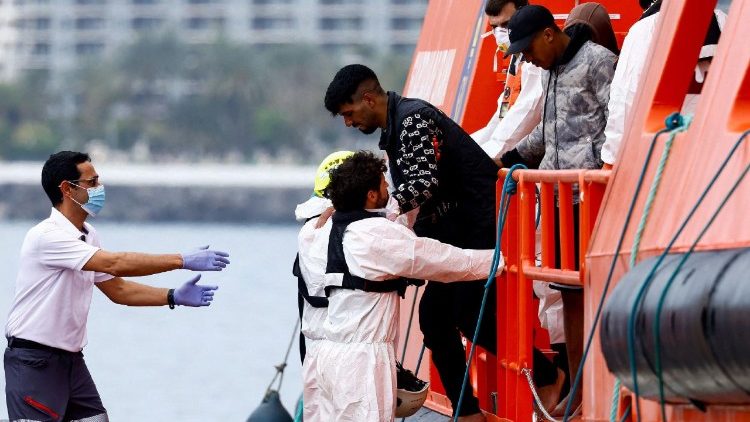
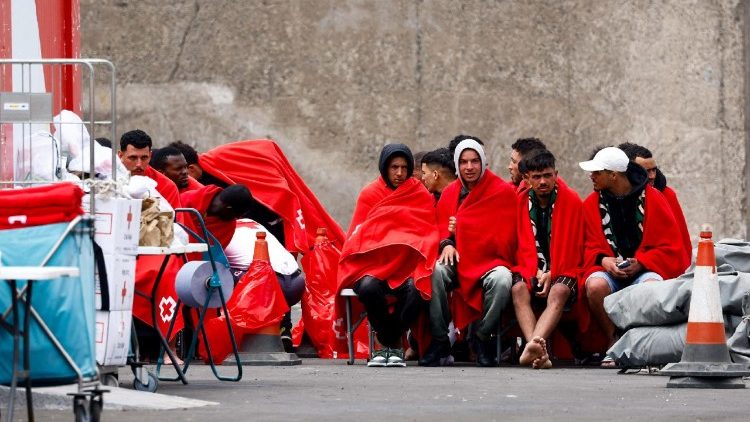
It was at this port in 2020 that more than 2,600 migrants—six times the capacity of the pier—were being housed in an open-air camp, sleeping on blankets and enduring sweltering temperatures. A surge in the number of migrants who had arrived on the islands were met with inadequate facilities. As a result, it became known as the “pier/dock of shame”.
Now, “that same port will experience Pope Leo’s presence,” Hernández pointed out, “that same port which witnessed immense suffering and pain after countless boats arrived on our shores during those years.”
For this reason, this encounter between the Pope and migrants is more than just a once-in-a-lifetime opportunity; it’s a chance. It marks a shift. There is the hope that this meeting, “held on the very dock that served as the gateway to that hoped-for future, will allow those people to feel accompanied by the Holy Father,” Hernández shared.
The migrants themselves helped organize this papal audience together with those organizations that care for them: the Diocesan Caritas and the Migration Ministry, and with various institutions dedicated to working with migrant communities.
One Canarian community
For some migrants arriving on the Canary Islands, faith plays a role in their journey towards integration and their new life. Hernández explained that some who were not Christian before have since embraced the faith “more deeply. They have undergone a process of conversion.”
For them and the 50,000 other people expected to fill the Gran Canaria Stadium, attending Mass with Pope Leo XIV on the evening of June 11 will be a special faith experience.

In the context of today, Hernández reflected on the message Christians always hope to hear—and one she believes the Pope will touch on—is “an encouragement to keep moving forward in our spiritual growth, to continue strengthening our faith, hope, and charity.”
We are called to create a better world for ourselves and for future generations—for our families and friends and for those we may never meet. The papal Mass will be a reminder of this universal call: “to do good, to serve others, to support the vulnerable and those in need.”
But it is not just for Christians. The stadium will be filled with non-Christians, Muslims, and representatives of different faiths and religious traditions. As Hernández pointed out, Pope Leo’s visit is one of unity, one of drawing people together on a path of faith and hope—no matter their religion.
The migrants who have travelled from their homeland to the Canary Islands “are one more part of the Canarian community.”
An example for others
Looking to the migration situation on the islands as a whole, Hernández acknowledged that while resources are limited and policies need to be better adapted to the current needs, “progress is being made, and people are receiving support.”
The Canary Islands, she argued, can be an example—both institutionally and through Church organizations—of how to integrate migrants into local communities.
Minors who arrived alone are in language courses and participating in development initiatives. Others have even been welcomed into local families.
Hernández offered the example of a village in the interior of the island of Las Palmas that had been facing depopulation. But at a certain point, the entire community, with their local authorities, came together and welcomed unaccompanied migrant minors.
These children not only revitalized the area and were integrated into the village, but “most importantly, they found families who are helping them learn how to be happy again and are providing them with the affection and care they may have left behind.”
Many of these children’s families “made painful sacrifices in the hope of giving them a better life” Hernández highlighted. In many cases, these children have found that chance through the Canarian families that welcomed them.
Thank you for reading our article. You can keep up-to-date by subscribing to our daily newsletter. Just click here.


