
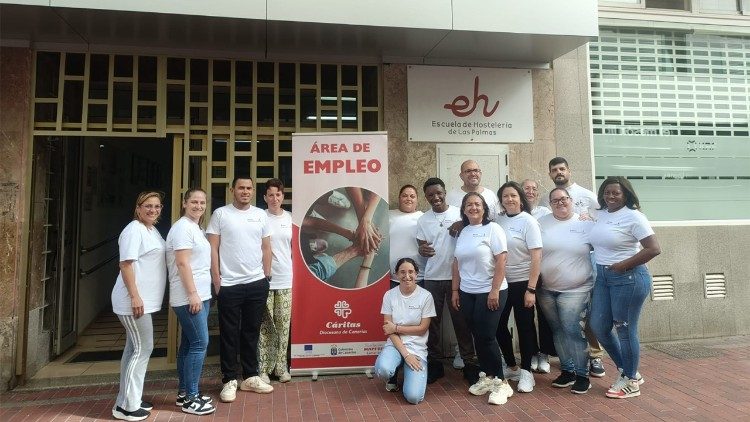
Caritas in the Canary Islands: ‘The Church is present where the state is not'
By Kielce Gussie
Pope Leo is arriving in the Canary Islands on the 11th of June. Having already visited Madrid and Barcelona, he will now spend one day in Las Palmas de Gran Canaria and another in Tenerife.
The final stage of his six-day journey Apostolic Journey to the Iberian Pensinsula will center on migration—an important topic for the region as about 24% of the population in Las Palmas alone is migrants.
Over the last year, the Spanish Ministry of the Interior recorded a massive drop in the number of migrant arrivals during the first three months of 2026 compared to 2025—due to several agreements signed between Spain and West African countries in recent years to limit the number of migrants reaching the Canary Islands. This, in turn, has shifted migration patterns, leading many to land in the Balearic Islands and the enclave of Ceuta instead.
But this has not eliminated the need for support and care for the migrants who have already made the treacherous journey to the islands.
That is where Caritas steps in.
Presenting their Institutional Report for 2025, Cáritas Diocesana de Canarias (Diocesan Caritas of Canary) stressed the urgency in improving the situation on the Islands as the country-wide statistics (GDP, inflation rates, employment figures, income rates) are not reaching those most in need.
Rather, they warned the most vulnerable “are excluded from a system that does not respond” to them.
As Secretary General of Cáritas Diocesana de Canarias Caya Suárez Ortega stressed in a conference in Rome on May 20, “the Church is present where the state is absent.”

Struggling to find support
Speaking to Vatican News, the Secretary General explained Caritas’ job is to “be by the side of the most vulnerable.” Their mission is to be that support to the migrants who find themselves thrust into a new country, language, and community in the Canary Islands.
Coming mostly from Latin America and Africa, Suárez highlighted that 25.5% of Las Palmas faces “social exclusion and poverty”, which “mainly affects the migrant population.” Arriving in the Canary Islands, thousands find themselves without a home or permits to work—two essential aspects for starting a new life.
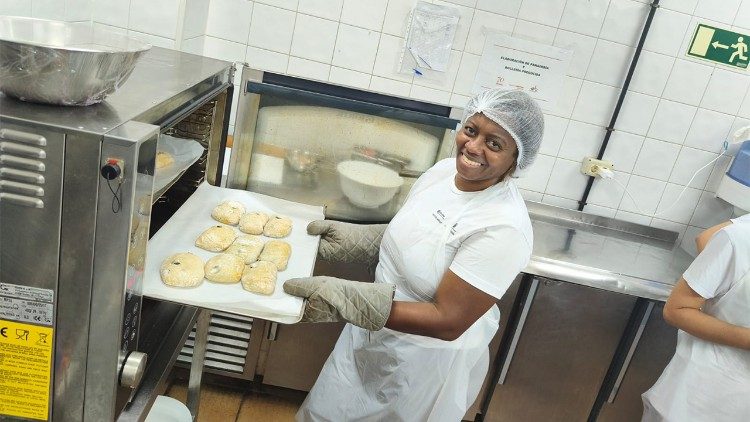
At the presentation of the 2025 report, Suárez explained the “abusive housing practices” that are “becoming normalized, leading to residential exclusion” for many of the migrant families.
At Caritas, migrants in need receive legal, social, and educational guidance and support to help them integrate into the local society and improve their situation. “We cover basic needs, such as food, but also housing rentals, so that they are not in a situation of being homeless,” Suárez explained.
For the many young people who arrive without a support network, they might end up on the street. To avoid this, Caritas accompanies them in the Hospitality Corridors project, which offers them a “chance for life.”
More than 22,000 people received aid services from Cáritas Diocesana de Canarias in 2025 alone. About 56% were migrants and half of them had an irregular administrative situation. Last year, the organization helped 2% more people than the year before, as stated in the report.
One of the deadliest migration routes
The call to protect human dignity and support those most in need reaches far beyond Pope Leo’s visit, yet this first papal visit to Spain in 15 years serves as a powerful reminder of our collective responsibility to care for migrants.
Suárez emphasized that both Pope Leo and Pope Francis have drawn attention to places like the Canary Islands.
“The Canary Islands generally go unnoticed because they are small islands very separate from Europe,” she shared, so their very different reality “goes unnoticed on many occasions.” However, papal messages on migration and respect for the lives of all people encourage the world to turn their gaze to those looking for a better life.

“Both Pope Francis and Pope Leo XIV have made us look at this concrete reality,” Suárez stressed, which is important “because the transatlantic route is one of the deadliest in the world.”
The path to the Canary Islands is more than 1,600km (994 miles) away from the African coast. Migrants spend days in rough waters traveling to the islands, and many, the Caritas Secretary General noted, die before reaching the coast.
For migrants, with migrants
Pope Leo’s visit will be special for those who survived the crossing and have been able to begin creating a life on the Islands. That is why, Suárez said, the organization of the Pope’s meeting at the port of Arguineguín in Las Palmas de Gran Canaria needed to involve the protagonists themselves.
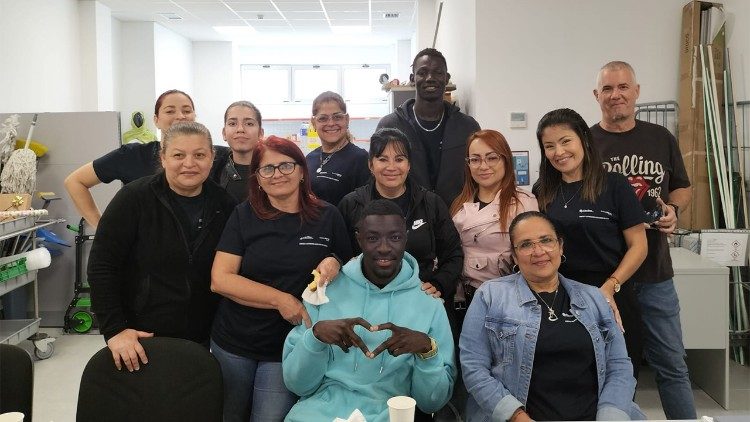
This was clear from the beginning, she highlighted. As a result, the preparation work for this event was a dialogue with the migrants themselves and those who accompany them. “From there, in each of the spaces and moments of the event, the protagonists will be the ones developing it,” Suárez said.
This meeting at the port in Las Palmas de Gran Canary is for migrants and by migrants to share their stories with Pope Leo and the entire world—a theme central to this second phase of the pontiff’s Apostolic Journey to Spain.
Thank you for reading our article. You can keep up-to-date by subscribing to our daily newsletter. Just click here.


