
Welcome to the 'home' for American priests in Rome
By Deborah Castellano Lubov
“I feel prepared for that call by my time here in Rome. First, because in this community, we are offered both the time and the space to fall in greater love with the Lord...”
In this way, the Casa Santa Maria of the Pontifical North American College was described by Father Carlos Londono, a priest of the Archdiocese of Milwaukee, USA, studying at the Pontifical University of St. Thomas Aquinas, the Angelicum, in Rome. Originally from Colombia and ordained in May of 2020 for the Archdiocese of Milwaukee, he lives at the “Casa.”
Vatican News was given a special look inside the structure and spoke with priests and the house’s Superior, Msgr. William Millea, an alumnus.
The Casa Santa Maria, a division of the Pontifical North American College, is a house of continuing formation and residence for English-speaking priests assigned by their superiors to pursue graduate-level studies in Rome. Msgr. Millea succeeded Rev. James Conn, SJ, who finished his six-year term on June 30, 2025.
Situated in the heart of the Eternal City, Casa Santa Maria provides a prayerful, scholarly, and fraternal atmosphere. Priests from American dioceses, assigned by their bishops, benefited from a broad spectrum of academic programs offered by the pontifical universities, ranging from philosophy, theology, spirituality, and canon law to fields such as ecumenism, marriage and family studies, psychology, and priestly formation.
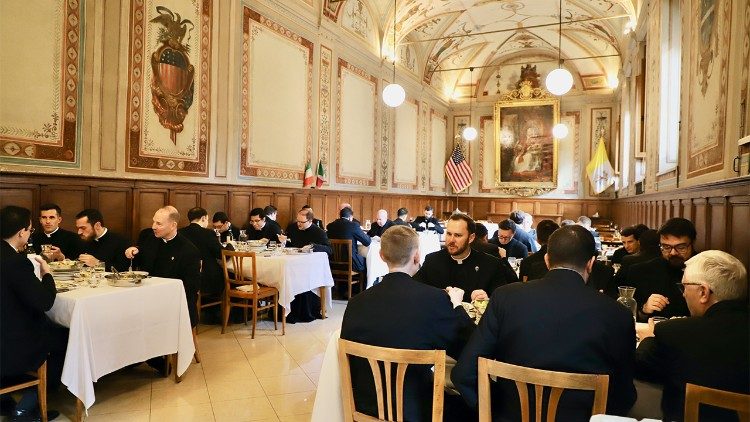
Community life at the Casa Santa Maria was characterized by regular personal and communal prayer, mutual support, and a joyful spirit of priestly camaraderie that enhanced the serious academic pursuits of the residents.
Father Carlos Londono, a priest of the Archdiocese of Milwaukee studying at the Angelicum, reflected on his experience.
Falling more in love with the faith
"I think of my time here in Rome as the opportunity to catch fire," he said.
"We have the Pope here in Rome, and we have we are surrounded by so many saints and so many witnesses to the faith that the only thing you can do here in Rome," he insisted, "is catch fire and be on fire with love for the Church and the Lord."
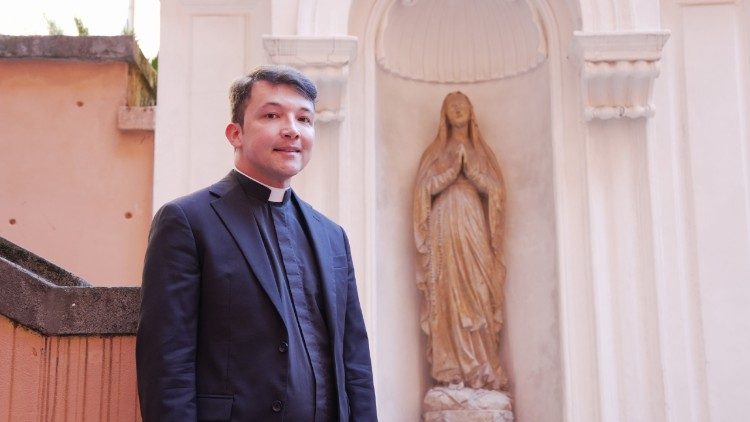
This, he said, he hoped to bring home, namely "that witness of the goodness of our Catholic faith, of the Church, and also the goodness of so many priests from all over the United States."
He reflected that his time at Casa Santa Maria had become "family" over the past year.
"Truly," he observed, "I've had the unique gift and blessing to feel at home with Pope Francis and Pope Leo, again, in special ways. As a fellow Latin American, I felt close to Pope Francis, himself being from Argentina, and now, with Pope Leo, knowing that we are both American priests, and of course he is the pope, but it feels as though Peter knew me personally."
Father Carlos says this ability to relate to both Popes over the years has made him feel a sense of closeness to both and further driven his own mission as a pastor.
Priests who love like the Lord loves everyone
Asked about what resonated with him from Pope Leo’s messages to priests, he suggested the Pope’s call for closeness to Christ.
"The Pope's call is to go to the Lord, to fall in love with the Lord in such a way that we love those He loves with greater passion. Love one another as I have loved you, he said. And I think Pope Leo's call has been to greater love of Christ, and from there, to love the Church, and to love all men and women in the world."
He said he feels prepared for that call by his time here in Rome. "First, because in this community, we are offered both the time and the space to fall in greater love with the Lord and also to come to appreciate the unique blessing that we all are."
Even if all the priests, he acknowledged, think differently, and perhaps, in our personal time, pray differently, we all get along.
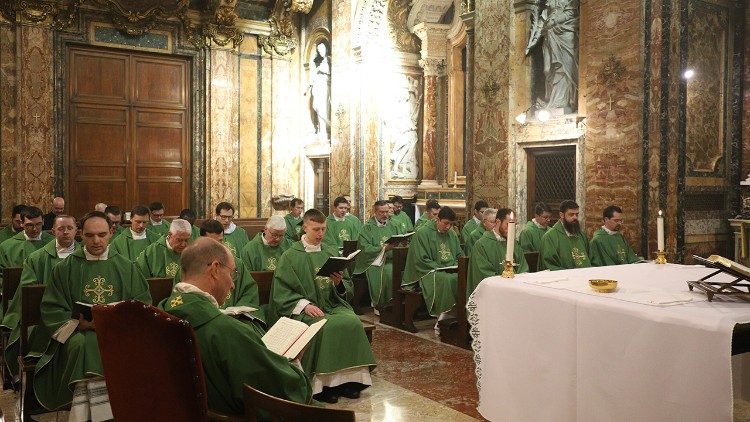
"We are all a family, and I am looking forward to bringing all that back with me to The United States and to really be able to preach on the fact that unity is possible. Unity in diversity is actually something we can achieve together."
Msgr. Millea: 'Priests leave here tremendously enriched'
Msgr. Millea, the Superior, offered an overview of the community and its mission.
"Priests who have studied here go back and are tremendously enriched, I feel, in their mission, as parish priests, even as chancery officials, for guiding the faithful and building up the Church in America.
Acknowledging we live in such a polarized society with people facing so many difficulties, he noted, the Gospel message is meant for every one of them in their particular situation.
"So, if a priest can go back and has the resources, spiritually, but intellectually, and culturally, to proclaim the message to those people in that particular situation, he's doing a tremendous missionary work. And that's what we're here for. We're here to encourage that."
He noted that priests, even if not with a future of serving abroad, benefit from the experience.
"A very important part of the experience of the American College, both in the seminary department and in the graduate studies, is that having lived here in a foreign country, speaking the language, learning to talk about the gospel, talk about our Lord, talk about the mysteries of the faith, and think about them in a different language, is actually a very, very fine missionary preparation for going back to our country, and proclaiming the same message that missionaries throughout the world are proclaiming to people in their situations."
He acknowledged certain institutional challenges, including enrollment and funding. "With the priest shortage in The United States, Bishops tend to be reluctant to give up a priest for a number of years, the number of years required to get an advanced degree. We don't have the manpower that we had. So that's obviously affected our enrollment, and enrollment in any institution is important. So we're kind of hoping that that in the future things will improve."
On campus, the U.S. Bishops’ Office for visitors to the Vatican assists pilgrims, while Casa priests regularly hear confessions.
What our American Pope Leo teaches us priests about unity
Father John Gancarz of the Archdiocese of Hartford in Connecticut, who was completing his doctorate and had previously lived at the Casa, reflected on the experience.
"The Casa Santa Maria, I would say first off, it's it's the community. It's the sense of Church. I think probably every priest would say that where he lives, I would hope. And we have around 40 priests here from The United States living together, studying together, praying together. It's a great sense of community. It's a sense of mission in a certain sense because we are away from our homes, but preparing to go back to our home to bring the Gospel and to teach whether that's in a seminary, whether it's in a parish, or any other sort of setting."
The priest serving the faithful in Connecticut expressed gratitude to all Catholics and benefactors who supported them.
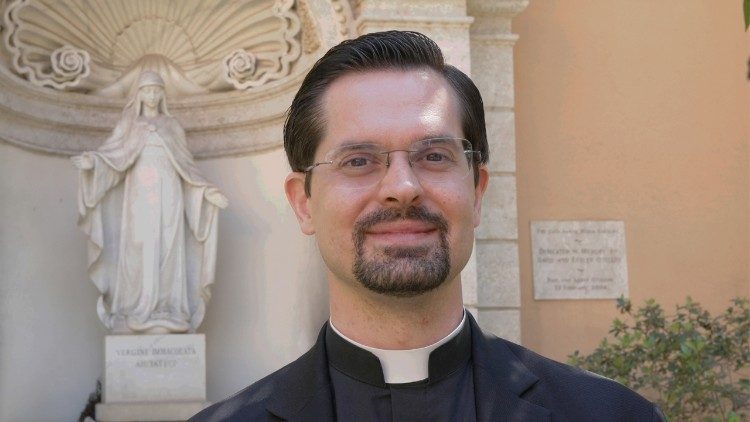
'Wonderful place to be in the heart of the Church'
"It is a wonderful place to be in the heart of the Church. Not only because of the theology professors that we have at the universities, but also to be in such proximity to the Holy Father and, to the the life of the Church here in Rome."
With people from all over the world coming to Rome, he marveled that it makes for a truly educational experience, not just from what we study in Scriptures and theology, but from the life of the city, lived together in prayer and study."
Fr. John reflected on the example of Pope Leo, especially as promoter of a unity among Catholics, including those in the US, who at times possess strong and differing opinions.
"One of the things Pope Leo possesses is a gift of of seeing the good in others wherever they might be. And, I think even for us as as Catholics, when the when God looks upon us, we're all sinners. Right? But but God sees the goodness in us. He loves everyone on this planet.
"It seems the Holy Father is looking at everyone in the Church and trying to say, what's the good that they're doing here, and let me support them in the good. And, 'Hey, maybe you don't agree on this,' 'But, don't you agree about this?' And this is a good thing here."
A model of Christly love for the faithful in American parishes
This, the priest reflected offers the American priests a good approach to parish life and differing views they will face back home.
"When we stop looking at each other as as the enemy, as someone just to fight against, to critique, but we look at this, oh, this is someone who God loves. This is someone who has a capacity to love." "And, let's instead of looking at the worst of of these sides of the Church, let's start looking at the best of people."
This is the work of unity, he said, acknowledging, it is hard work. Fr. John observed that Pope Leo calls us, in order to build unity, to a process that is not comfortable, but is necessary. The priest recalled that "it's one that our Lord calls us to. His sacrifice on the Cross was the ultimate sacrifice of unity."
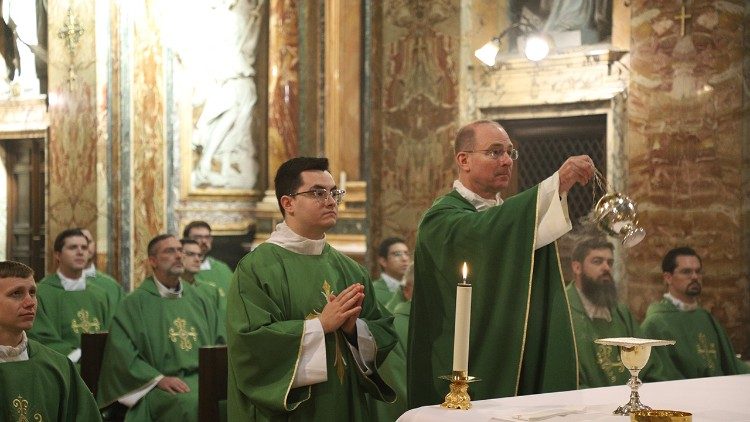
"I think for all of us here at the Casa of Santa Maria, but I would say for myself personally, looking at Pope Leo's witness, it's about seeing what's the good that everyone can contribute here, and how can I even even strive, and even strain sometimes, to see what what's the good here that this person's seeking..."
From there, he noted, we can come to terms, agree upon that good, and go from there, focusing on that instead of our divisions.
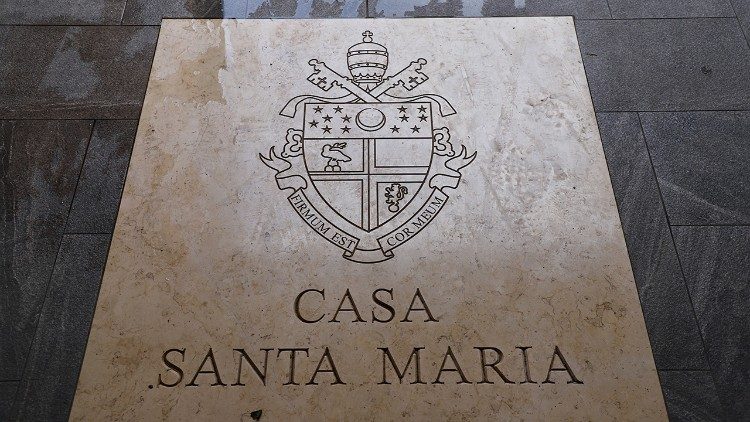
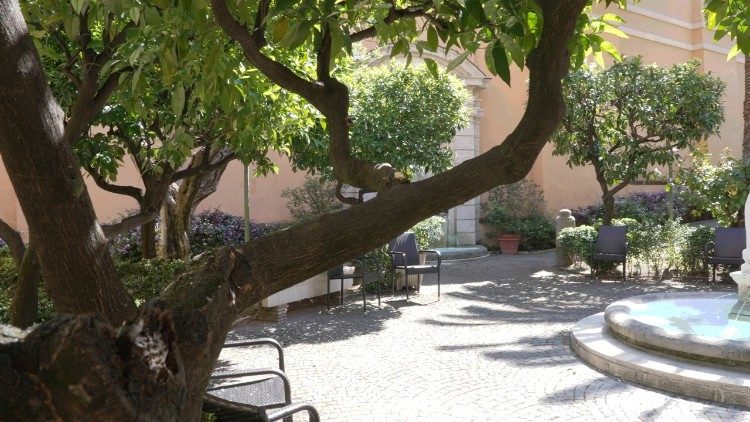
The Casa itself has a rich history. Originally a 17th-century Dominican monastery, it became the first home of the North American College in 1859, founded by Pope Pius IX. After World War II, the seminary moved to the Janiculum Hill, and the Casa was renovated to serve as a graduate residence for priests.
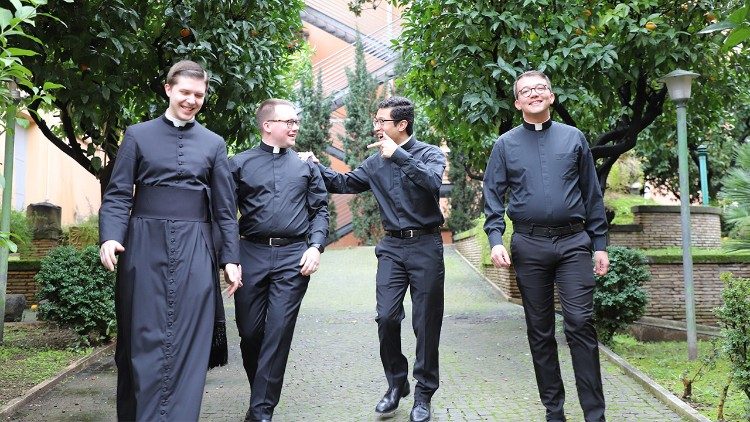
Today, nearly 40 priests live there, studying at various pontifical universities across Rome.
"We're very happy with the fact that even though our numbers are lower than they have been in the past, it's a good solid community," Msgr. Millea said.
Thank you for reading our article. You can keep up-to-date by subscribing to our daily newsletter. Just click here.


