
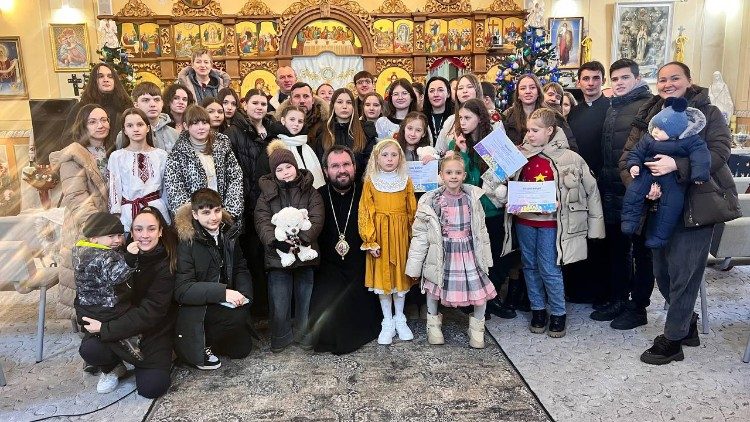
Exarch of Donetsk: The hope to overcome evil remains strong
Vatican News
Ahead of the four-year anniversary of Russia’s full-scale invasion of Ukraine, Vatican News’ Svitlana Dukhovych spoke with Bishop Maksym Ryabukha, Archiepiscopal Exarch of Donets’k, Ukraine.
Despite the bombings and violence, the bishop explained that he continues to hear stories from parishioners about “the fraternity, friendship, and mutual support they are able to live, despite everything.”
He also highlighted how young people have not lost hope in the midst of the conflict. Rather, Bishop Ryabukha stressed, they are people who “have the courage to live, who have dreams to fulfil, and who have a vision of the future that inspires courage in those who listen to them and feel part of their lives.”
The following is a transcript of the interview, which has been edited for clarity and length.
Your Excellency, how is the humanitarian situation in your Exarchate? Where is the situation most difficult?
The humanitarian situation in our Donets’k Exarchate is indeed very difficult. This winter has been one of the toughest since the war began in our territory in 2014. We face an extremely challenging situation as the Russians have bombed energy structures, and electricity has been cut off across our territories for more than 20 hours a day. In the villages, where people are used to heating with wood stoves, it's somewhat easier because there is still some local support.
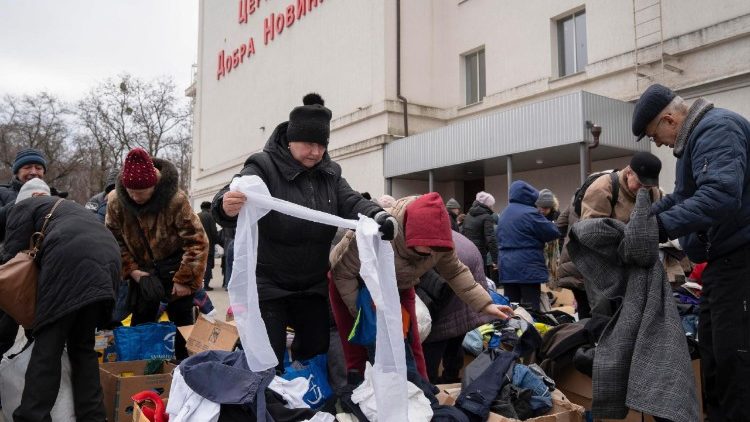
The most difficult situation has been in the cities, where many multi-story buildings lack independent heating systems. Therefore, the power outages also result in a lack of heat, water, and other basic necessities. However, we must say that the government is doing everything it can to deal with the consequences of these attacks. The technical support staff is doing the impossible to restore normal living conditions for our citizens.
How do you provide humanitarian support to the people? Do you have enough resources to do so?
We try to offer support in various ways. We are grateful to God because He has envisioned the Church as a very great reality. The universality of the Church allows us to have many friends who, even outside of our own context, are still close to us in their hearts, thoughts, prayers, and even through concrete acts of support.
Various organizations help us purchase fuel for the generators. At different times, we have had friends who provided generators for all our parishes and the communities we support. Even now, friends have sent us generators, which we were able to distribute to people in our parishes who live in private houses in villages or cities. Some of these generators are also used for the various activities we run, such as children’s centers, catechism schools, etc.
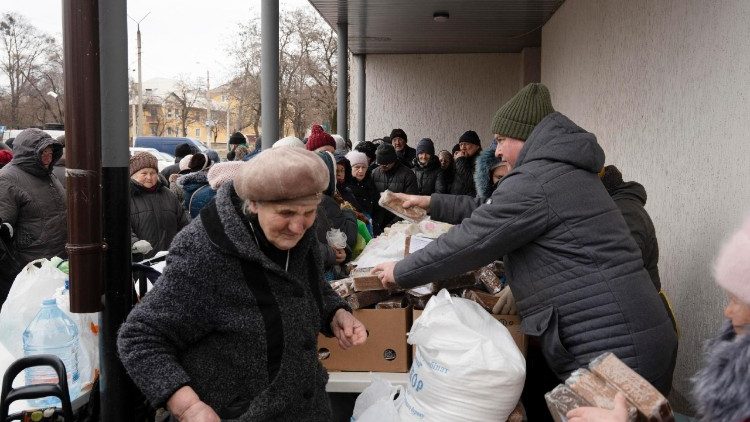
All the spaces of our churches have become places of recovery, hope, and sustenance during this very difficult time. In addition to the parish communities, which try to do everything possible locally, we also have a Caritas network. There are seven large Caritas centers in our Donets’k Exarchate that provide support in various cities and villages across our territory. This is a great resource for helping people. We are very grateful to all the benefactors who, through various organizations, try to be close to the Ukrainian people as they go through these difficult times in their lives.
For example, one organization called me saying: “Your Excellency, tell us what you are going through, what is life like?” After I explained the situation, they said: “We can help you with medicine.” So, we organized the distribution of essential medicine for flu and other illnesses in various parishes. This is just one of many ways the world is reaching out to Ukraine and our people today.
Have many people have left the cities and villages in your Exarchate in recent months?
Looking at the movement in the cities and villages, it’s hard to speak of a large-scale migration. For instance, Zaporizhzhia is still living its normal life. Some people have left the cities. It's mainly the residents of villages closer to the frontline in the Donets’k region who are leaving. Many families there are gradually leaving their villages in search of safer places. However, these movements are relatively ordinary, because people come and go. As soon as the situation calms down a little, many families begin returning to their villages and cities.
How are pastoral activities carried out? How do priests and the clergy face such serious challenges?
Fortunately, we are still able to carry out pastoral activities in a regular manner. Despite the war and all the challenges we face, our priests and our faithful always strive to be active in prayer, in solidarity, and in fraternity with each other. Sunday prayers and daily Masses are regularly celebrated—where the situation allows—because with the shifting frontlines, we are unfortunately losing some parishes.
However, where possible, people continue to pray. There are also other activities: catechism for children, youth, and families; prayer meetings for different communities, such as Mothers in Prayer and the Knights of Columbus. All these groups try to maintain their regular meetings.
There are also various training moments. For example, in the last month, we organized training for youth leaders and altar servers who help our priests in the parishes of the Donets’k Exarchate. We also celebrated the beginning of Lent. All the regular activities that the Church strives to live, we promote and carry out even in our territory.
You often visit the parishes of the Exarchate and meet people of all ages, including the youth. What do the young people talk to you about?
In reality, visits to the parishes are moments when we come together as one big family. Every time I visit a parish, after the liturgy, I try to share everything the Church is going through at this time, such as the various events and activities taking place. This helps people in the different areas where we have churches have a broader perspective and a greater sensitivity to the ecclesial reality.
Then, there are also moments of personal encounter, when people often ask me, “What does the future hold for us?” At the same time, however, they also share their hope. They say that God would not have given us life without having thought of how to support and help us. Many also share beautiful things with me: the fraternity, friendship, and mutual support they are able to live, despite everything. These are moments that reveal great humanity.
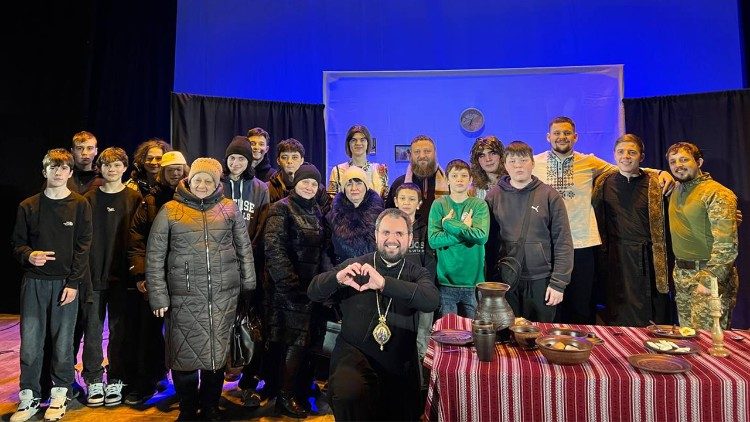
When I speak with young people, they often ask about the meaning of life or the meaning of their hope. They share their dreams and ask for advice on how to move forward, on how to navigate this troubled world while staying true to what they feel in their hearts. I am moved to see these young people who have dreams and a very deep and clear sense of life.
Here—in a war zone—I meet many young people who have the courage to live, who have dreams to fulfil, and who have a vision of the future that inspires courage in those who listen to them and feel part of their lives.
What would you like to say to the readers and listeners of Vatican News on this sad fourth anniversary of the large-scale invasion?
When I think about the anniversary of the beginning of the large-scale invasion, I am moved by the thought that God has not abandoned His people. Evil manifests with great force, and in reality, the sin that allows the evil one to operate through human lives is very powerful. Yet, despite the vastness of the hatred that the Ukrainian people perceive from the aggressor, we see that God does not abandon us.
I think, for example, of Zaporizhzhia. Since October 2023, many have been saying, “Between tomorrow and the day after, the Russians will destroy the whole city; you won't be there anymore. It will be a dead zone, and everything will be wiped out.” Yet here we are in February 2026, and life in the city continues.
There are many stories of life that, despite the war, continue here. I believe nothing can prevent God from converting the human heart. All our prayers are directed in this way because the conversion of man brings life and peace. Sometimes I think there are few of us who believe that God has the power to overcome this evil. Yet the dream and hope of victory over evil are stronger than all the fears and hardships we are experiencing.
What I would ask of the readers and listeners of Vatican News is to support us, to let us feel their fraternity in this invocation, in this incessant prayer for the conversion of the human heart. Because those who take life, those who press the buttons to send bombs to kill innocent people, must stop; We pray that the eyes of all be opened to life and that hearts open to God.
Thank you for reading our article. You can keep up-to-date by subscribing to our daily newsletter. Just click here.


