
Ukrainians fight frigid winter with the warmth of volunteering
By Svitlana Dukhovych
Russia’s full-scale invasion of Ukraine began on 24 February 2022, in the middle of winter.Although that winter was relatively mild, the cold quickly proved to be a serious challenge for both civilians and soldiers. No one was prepared. Basic resources were lacking, as was even minimal security.
Yet despite these hardships, Ukrainians found the strength to resist, drawing on their ability to self-organize and to create small spaces of light and human warmth where it seemed impossible—during the darkest moments and in the coldest places.
It is through these acts of solidarity and mutual care that life continues to flourish, even amid war.
The origins of the initiative
Kseniia Samoilych, a young woman from Dnipro, the capital of an eastern Ukrainian region, tells the story of the volunteer initiative 'The Sewing Company'.
Since its founding, the group has produced more than 300,000 items of adaptive clothing for wounded civilians and soldiers treated in over 90 Ukrainian hospitals, bringing together more than 800 volunteers worldwide.
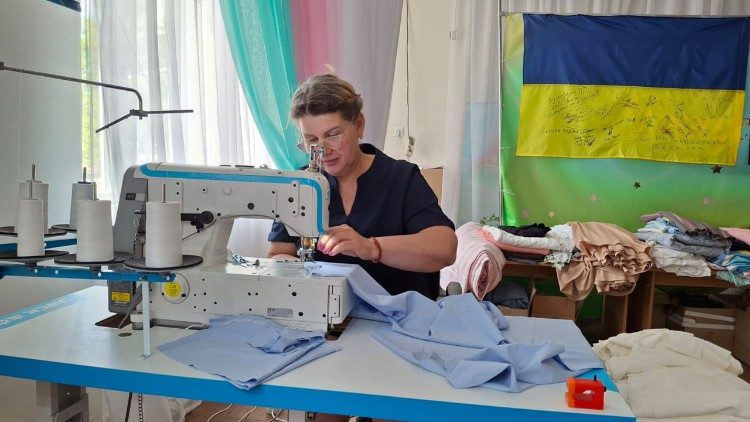
“We launched the initiative on 28 February 2022 together with Maryna Palchenko,” Kseniia explains. “It began with a call on Instagram: people were needed who could sew balaclavas for young members of the Territorial Defense. Some IT workers in Dnipro provided a space and funds to buy fabric, we brought our sewing machines, and we involved other women from the sewing course Maryna and I were attending.”
Thanks to careful organization, the group soon reached a production level of up to 495 balaclavas per day—an unthinkable number before the war. Requests later expanded to include thermal underwear, despite serious difficulties in sourcing materials, as many shops were closed and suitable fabrics were hard to find. When funds ran out, the group turned to social media for support.
Seamstresses from various regions of Ukraine—many of them displaced by the fighting—expressed their desire to help. The group began fundraising, purchasing fabrics in bulk, and sending sewing kits to volunteers across the country.
With patterns and instructions shared online, the Sewing Company expanded beyond Ukraine’s borders and now has 25 hubs in Ukrainian cities and in countries including Canada, Switzerland, Montenegro, the United Kingdom, Poland, the Czech Republic, and Germany.
Adaptive clothing for the wounded
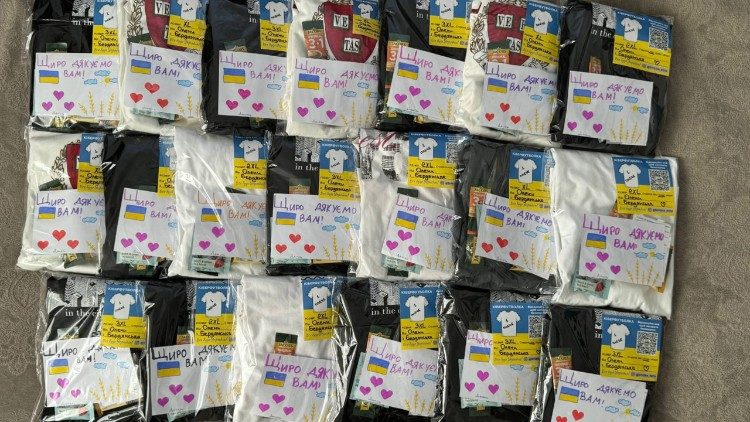
The adaptive clothing produced by the Sewing Company is intended for both wounded soldiers and civilians injured in bombardments and is provided entirely free of charge. One recent case is that of Yevheniya, a woman from Odesa who suffered severe burns in an attack on December 30.
“We sent her adaptive clothing,” Kseniia says. “She is now in hospital in Lviv undergoing treatment, and this clothing is the only kind she can wear at the moment.”
Growing needs, limited resources
Today, the group works with more than 100 hospitals, clinics, and stabilization centers, regularly supplying warm clothing—both standard and adaptive. However, needs far exceed the volunteers’ capacity, especially during winter, when extreme cold poses serious risks to the health of wounded soldiers and civilians.
“For our people,” Kseniia says, “it’s important that someone can help us at least until May with fleece trousers, fleece sweaters, fleece blankets, and socks. It is very cold now. In the evenings, temperatures drop to minus 15 degrees Celsius. It hasn’t been this cold for a long time. I remember March 2022—it was also very cold, probably the coldest spring of my life.”
Overcoming difficulties
Kseniia explains that the initiative is entirely volunteer-based: all seamstresses and coordinators work without pay. Funds raised are used exclusively to purchase fabric and cover shipping costs, a task made even harder by frequent power outages caused by bombardments.
Despite the lack of electricity, the volunteers continue sewing, often at night. They adapt to the conditions by using generators and modifying patterns so they can sew by hand when power is unavailable. The goal remains clear: to keep wounded soldiers and civilians warm and prevent frostbite.
Although physical and mental exhaustion is a constant challenge, Kseniia says she draws motivation from the strong community involvement and the steady flow of requests for thermal and adaptive clothing.
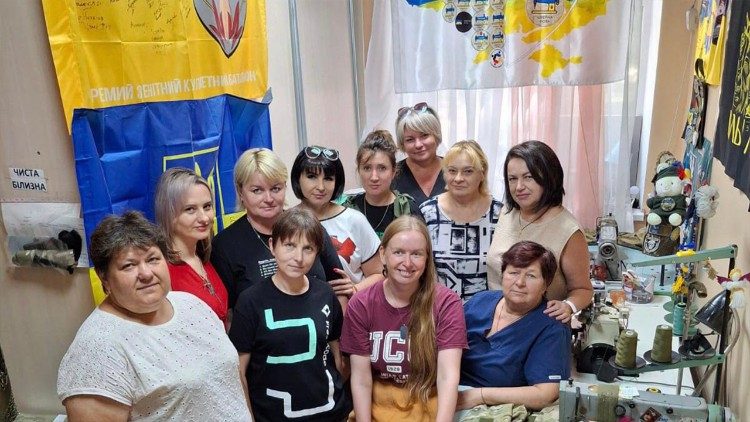
“What inspires me most is knowing that I’m not alone,” she says. “There are people who are not indifferent. No matter how many garments are needed, there is always a way to find the materials and the people to sew them—even though we are cold too, because there is no heating in our facilities. That’s why we’ve moved most of the work into our homes. What motivates me is being able to support our fellow citizens at the very moment they need it, after they’ve been wounded.”
Caring for others
Before sending the clothing to hospitals and first-aid centers, the volunteers carefully wash, dry, and package each item, fully aware of how difficult it is to do so quickly without electricity.
“This shows that we truly care about people’s dignity and well-being,” Kseniia says. “We try to do everything as if it were for our loved ones, our friends—as if it were for ourselves.”
Thank you for reading our article. You can keep up-to-date by subscribing to our daily newsletter. Just click here.


