
Parish Priest of Nuuk, Greenland: ‘Our home is not for sale’
By Valerio Palombaro
“We want to choose [Greenland’s] future ourselves.”
A quiet determination runs through the icy streets of Nuuk, which, with its 20,000 inhabitants, is Greenland’s main city.
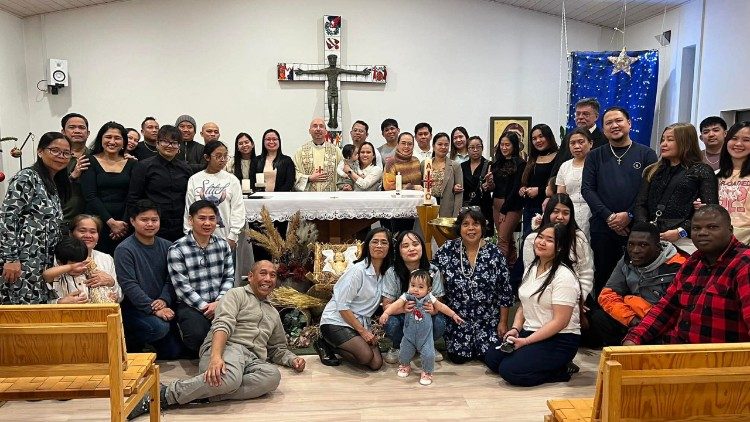
It is Father Tomaž Majcen, a Slovene Franciscan friar, who is describing the atmosphere on the Artic island to Vatican Media. For about two and a half years, he has served as parish priest of Christ the King Church in Nuuk—the only Latin Catholic parish across Greenland’s more than two million square kilometers of land and ice.
A people with a history and a culture
An island with just 56,000 inhabitants has now become a focal point of global geopolitical competition over rare earths and energy resources.
“The atmosphere in Nuuk right now is quiet on the surface, but inside there is tension”, Father Majcen says.
Since accepting the invitation in the summer of 2023 from the Bishop of Copenhagen to take pastoral care of the Catholic community on the Arctic island, he has come to know its people well. “People in Greenland are not loud. They watch, listen and think before they speak. Lately, … talk about politics happens more often in shops and coffee tables.”
Many people, the Slovene priest explains, feel “hurt” rather than angry when they hear foreign politicians speak of Greenland “as power or property”.
“It touches their pride,” he said. “They want to be seen as a people with their own story, language, culture and faith. There is no fear, but people know that strong voices far away are talking about Greenland without really understanding it.”
This, Fr Majcen says, brings both a sense of “weakness” and of “togetherness”.
A small but vibrant Catholic community
That sense of togetherness is nourished and grounded within faith communities. About 90 percent of Greenlanders belong to the Evangelical Lutheran Church, which is deeply rooted in the people’s history and identity. “Catholics are only a very small minority—here in Nuuk there are about 500 Catholics, and across all of Greenland around 800—coming from different nations, languages, and backgrounds.” Many come from the Philippines and Europe. “Our parish is small, but very much alive.”
The Church in Greenland, though tiny in number, plays an important role, according to Nuuk’s parish priest, in reminding people that “land is never just land. It is always bound to people, memories, ancestors, and future generations.”
Every Sunday, prayers are said in Lutheran churches for the Kingdom of Denmark and for Greenland’s autonomous government. The initiative, organised by Paneeraq Siegstad Munk, Bishop of Greenland for the Evangelical Lutheran Church, takes place in an unprecedented geopolitical context.
“Churches,” Father Majcen insists, “offer something quiet but powerful: prayer, presence, listening, and moral grounding. When we speak of creation as a gift of God and of human dignity, we are already saying something very strong against reducing Greenland to a strategic object. Greenland must not become a chessboard for global interests.”
A question of dignity
Current events may strengthen Greenlanders’ desire for independence. “People are realistic,” the Slovene priest observes. “They know that independence is not just a dream, but also a great responsibility. Economic issues, education, healthcare—all of this matters.”
What is very clear, in any case, is that Greenlanders do not want to “trade” one form of dependence for another. “The idea of being absorbed or dominated by another power is widely rejected,” he says. “For many, independence is a matter of dignity, cultural survival, and self-respect.”
Father Majcen also describes reactions to the arrival of a small group of European and NATO soldiers. “Any military presence raises questions,” he says, “but this is generally perceived differently from aggressive foreign interest. Most people understand it within the framework of cooperation and shared responsibility for security in the Arctic region. There is no enthusiasm for militarization, but there is awareness that the Arctic has become strategically important.”
Peace among the ice
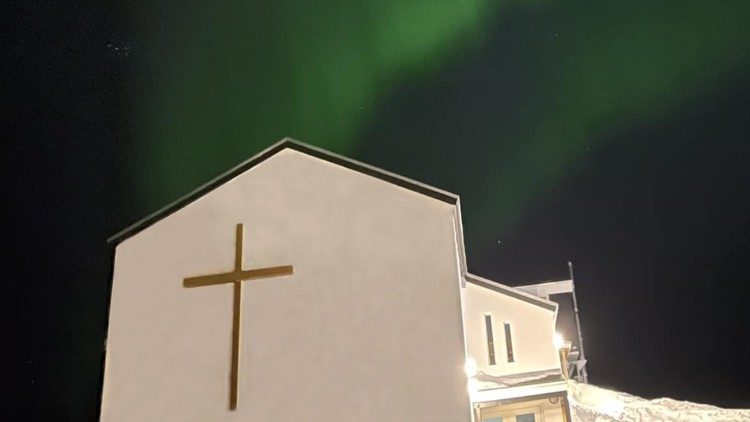
All of this inevitably leads back to climate change. “Here,” says the parish priest of Nuuk, “it is not a theory, but something you can see with your own eyes. The structure of the ice is changing, the seasons are changing, and hunters speak of how nature no longer behaves as it once did.”
Life among the ice strips away what is superfluous. “As a priest, I often feel that this land itself teaches prayer. The silence, the vastness, the fragility—all of this invites humility. Preserving Greenland’s environment must begin with respect: respect for nature, for indigenous knowledge, and for future generations.”
“We must recover the idea that Creation is not ours to exploit, but to care for,” he concludes. “Politically and economically, decisions must be slow, thoughtful, and rooted in long-term responsibility, not short-term gain. Because once this land is damaged, it cannot easily be restored.”
Thank you for reading our article. You can keep up-to-date by subscribing to our daily newsletter. Just click here.


