
Ecumenism and its lasting ripple effect
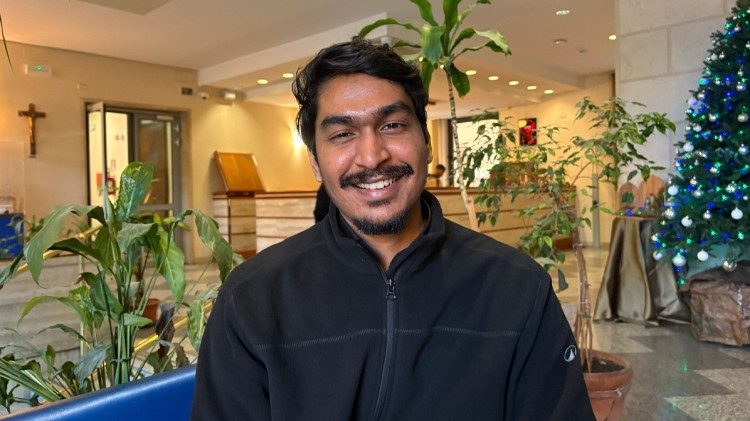
Among those present for this week is Deacon Abel Punnoose, a 29-year-old Christian from India and a member of the Believers Eastern Church, visiting Rome as part of a delegation from the Bossey Ecumenical Institute of the World Council of Churches.
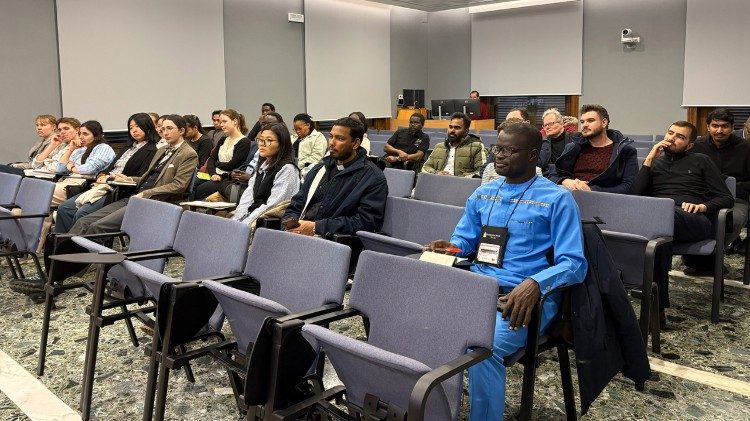
For one week, the group has immersed itself in the life of the Catholic Church, meeting Cardinals, praying together, and confronting the differences that still mark Christian communities.
“This is the Week of Prayer for Christian Unity,” Abel says in an interview with Vatican News. “We are here to understand where we differ, but also to work intentionally towards unity.”
Bossey is not merely an academic institution. It is, Abel explains, a place where ecumenism is lived daily. Students from diverse traditions and countries share not only classrooms, but meals, prayer, and ordinary life.
“In the beginning, the differences are very visible,” he admits. “But over time, you realise that you hold far more in common than what divides you.”
Prayer, he says, becomes the turning point. “Coming together in spiritual life gives fuel to unity. It is not an easy journey—we have difficult days—but with commitment and genuine intention, lived ecumenism becomes possible.”
A divided Christianity and a divided world
Christian unity, Abel insists, is not an internal concern alone. It carries consequences for the world the Church seeks to serve.
Quoting the General Secretary of the World Council of Churches, Reverend Professor Dr. Jerry Pillay, Abel recalls the stark warning: "A divided Christianity has nothing to say to a divided world." In societies fractured by politics, caste, ideology, and fear of the other, the credibility of the Christian witness is tested daily.
“If we say we are part of God’s Kingdom,” he continues, “we must show it visibly with our lives.” Constant internal conflict, he stresses, weakens the Church’s testimony. Unity, by contrast, becomes a form of proclamation.
Human freedom, compassion, and solidarity with the suffering emerge as shared priorities. Abel speaks of migration, persecution, and economic hardship not as abstract issues, but as realities demanding a united Christian response.
“Giving up comfort for the sake of others is foundational to our faith,” he says. “Across denominations, this is where we can truly come together.”
The Indian context: unity begins within
For Abel, these questions are deeply personal. Christianity in India, he notes, dates back to Saint Thomas and has a long and complex history, particularly in his home state of Kerala. Yet despite centuries of presence, Christians remain a small minority—and divisions persist even within the Church.
“It is still painful to see casteism existing inside Christian communities,” he says. “If we have not addressed injustice within ourselves, how can we be a credible witness to the world?”
At the same time, he acknowledges the Church’s long engagement in education, social justice, and poverty alleviation in India. Much has been done—but much remains. “Young people must take responsibility,” he insists. “They must go to places of suffering and take a stand.”
A mutual exchange of gifts
At Bossey, Abel has found space not only to speak of these hardships but also to be heard. Ecumenism, he says, must move away from old imbalances shaped by colonial history and towards a genuine exchange of gifts between North and South.
“The Global South often needs material support,” he explains, “but we also have much to offer—our spirituality, our traditions, our stories.” True unity, he believes, grows through listening as much as through giving.
Encountering the Pope
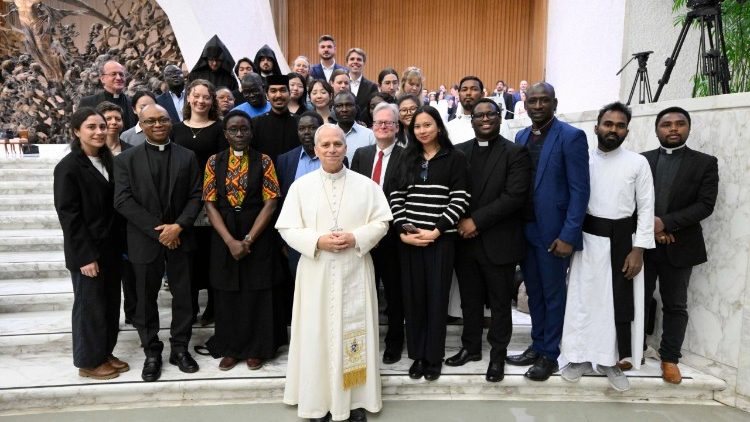
One moment, however, stands out with particular clarity. During their visit, the delegation met Pope Leo XIV.
“He was standing right in front of me,” Abel recalls. “He looked at us, asked how we were, and took time with us. That humility stayed with me.”
It was the simplicity of the encounter that left a real impression on Abel. “A person in his position did not need to do that,” Abel says. “Yet he did. That is something I want to carry with me—whatever responsibilities I may have in the future, I hope to be as humble as Pope Leo was with us."
Small steps, lasting ripples
As the week draws to a close, Abel is realistic about the road ahead. He says he may not live to see the Christian Unity they strive for in his lifetime. But that, he believes, is not a reason for despair.
“If each of us works for unity in our own small context,” he says, “it will create ripples.” Ecumenism, lived faithfully and patiently, becomes a quiet force—one that does not shout, but endures.
Thank you for reading our article. You can keep up-to-date by subscribing to our daily newsletter. Just click here.


