
The enduring commitment of religious congregations to South Sudan’s recovery
Christine Masivo, CPS – Vatican City
At the time, facing dire need, the Bishops appealed to religious leaders in Rome for help from their congregations worldwide. Their simple request was for the universal church to stand with them and help build institutions. This led to the birth of Solidarity with South Sudan.
When South Sudan gained independence on 9 July 2011, the expectations from citizens became urgent.
A shared mission
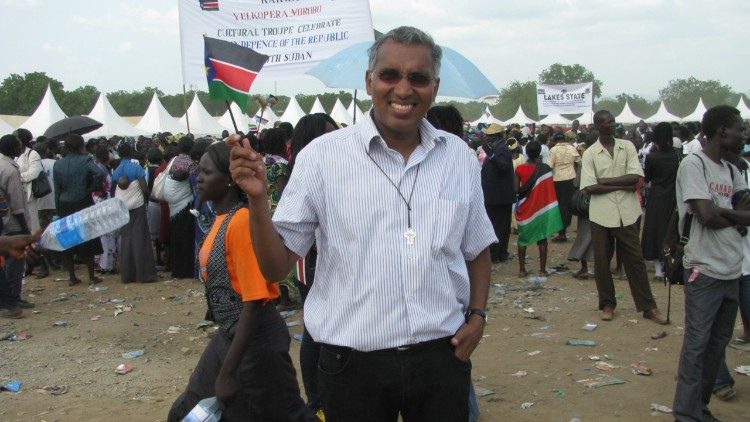
The first group sent to South Sudan landed in 2008. Fr Callistus Joseph, a Claretian Missionary, was one of the pioneers, serving as the director of the projects and coordinating them all. Speaking recently to Vatican News, Fr Callistus explains that Solidarity with South Sudan was formed as a collaborative effort between the leaders of religious congregations and the local bishops. Rather than work independently, the initiative focused on shared responsibilities and common goals.
At that time, nineteen missionaries from 16 countries volunteered to serve, bringing with them their diverse skills in teaching, nursing, agriculture, and pastoral work. United by a commitment to walk alongside the people of South Sudan, they immediately recognised urgent needs in teacher training, healthcare, pastoral formation, and agriculture. There were only a small number of trained teachers and very few doctors, qualified nurses, and midwives.
Rebuilding from scratch
Education was a priority because the country had chosen to switch from Arabic to English as a language of instruction. There was a great need for English-speaking teachers. “We established the teachers' training Centre in Yambio and Malakal,” said Fr. Callistus. “These institutions aimed to train both current and future educators.” The few teachers available, had kept education alive during the war, teaching under trees, in churches, and in refugee camps. Solidarity’s goal was not to replace them but to strengthen them.
Malakal College was later closed due to renewed conflicts in 2013, and Yambio College continues to operate, training teachers for the country’s schools. Eventually, South Sudan began producing its own qualified teachers.
In the health sector, Solidarity helped restore and run health training institutes in Wau starting in 2018. Supported by partner organisations and working with government ministries, the institutions began training nurses and midwives in 2019. These initiatives have since produced the country’s healthcare workforce.
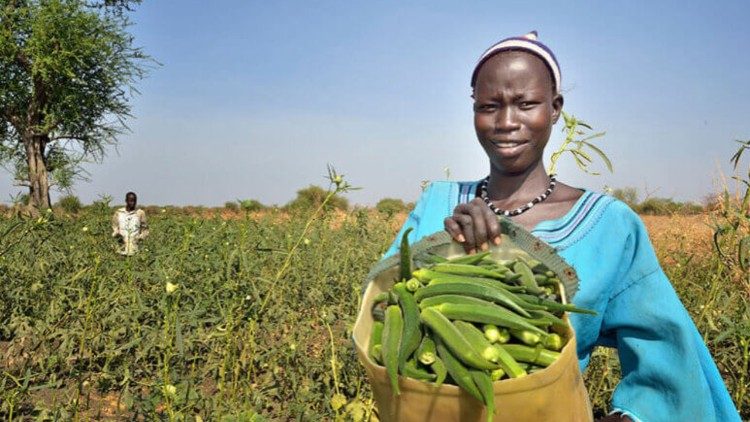
Similarly, agriculture also developed as a practical means of supporting communities and institutions. A farming project near Yambio not only provided food for students and staff but also created work opportunities for displaced people. The project has grown with the support of local leaders and international partners.
Pastoral formation and peacebuilding remained central to mission. To support these aims, a centre was built offering affordable training for catechists, church leaders, youths, and peace workers. This reduced costs and expanded diocesan access to nationwide ongoing formation.
Solidarity and mission in action
According to Fr. Callistus, one of the clear outcomes of mission is its example. He explained that religious men and women from different backgrounds living together and offering visible models of cooperation in a country marked by division was a living testimony to what can be achieved when communities come together. He added that this daily witness, alongside education and training, has contributed to a growing sense of shared national identity.
The future ahead
Looking ahead, despite South Sudan’s current socio-political challenges, Solidarity remains focused on training, peace education, and self-sustainability for the local church. While international funding continues to play an important role, the long-term aim is for local communities to fully manage and sustain these institutions. The mission experience demonstrates that sustainable collaboration can yield lasting results in even the most difficult contexts.
“Despite the renewed violence in 2024, Solidarity with South Sudan has remained present,” said Fr. Callistus. He emphasised that the long-term presence of religious men and women living and working together has been central to the initiative's impact, reflecting their shared commitment to helping South Sudanese communities rebuild skills and take responsibility for their own future.
Thank you for reading our article. You can keep up-to-date by subscribing to our daily newsletter. Just click here.


