
Mobilising Leadership: Key to solving Africa’s water and sanitation crisis
Paul Samasumo – Vatican City
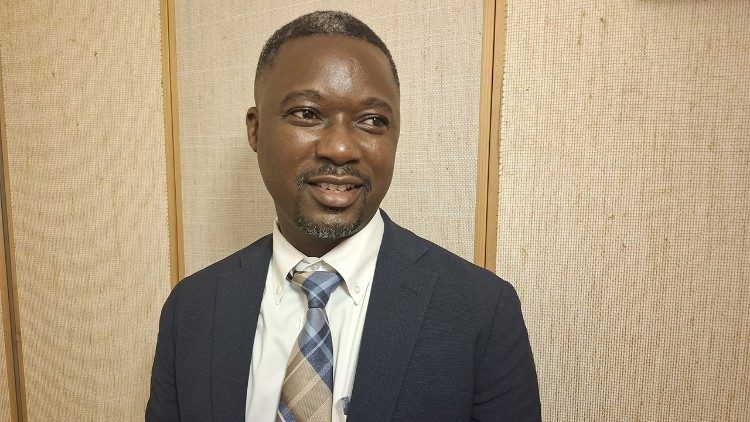
For Muyatwa Sitali, Acting Chief Executive Officer of Sanitation and Water for All (SWA), the crisis is not fundamentally about scarcity. It is about prioritisation.
Recently, in Rome, Mr Sitali spoke to Vatican News about this crisis. He emphasised that the persistence of these challenges reflects not only growing demand and climate pressures, but also the extent to which water and sanitation have yet to be consistently elevated as political priorities.
Mobilising partners worldwide
Based on data highlighted by Muyatwa Sitali to Vatican News, the global water and sanitation crisis is severe, with particularly devastating impacts in Africa.
A Zambian national, Mr Sitali, is a development policy specialist and the Acting Chief Executive Officer at Sanitation and Water for All (SWA), a global partnership with its Secretariat in New York. He explains that the consequences of this crisis include challenges related to clean water and sanitation, food security, poverty, diseases such as cholera, and conflicts over water sources. Sometimes, the issue isn't just a lack of water but the quality of the water available.
Mr Sitali’s work involves mobilising partners worldwide to address these pressing challenges and mitigate consequences.
Prioritise sanitation and water
“Sanitation and Water for All is hosted at UNICEF in New York. We have more than 500 partners, including 90 governments,” Mr Sitali said. He noted that a defining feature of the partnership is the strong representation of African governments. He added, “One of the key strategies for tackling sanitation and water challenges is engaging at the political level with ministers, presidents, and heads of state—people in government who make decisions on water and sanitation issues. We involve political leaders and others to ensure they have the right evidence to enable them make commitments about what they want to do.”
According to Mr Sitali, when heads of state and government prioritise sanitation and water issues, the chances of success increase. The COVID-19 pandemic clearly demonstrated this point.
Excess demand and climate change
Tackling water scarcity driven by excess demand and climate change will require a dramatic improvement in how Africa manages its water resources. It will also necessitate strategic planning, investment in resilient infrastructure, and policies that incorporate climate adaptation into water management frameworks.
“The platform itself, Sanitation and Water for All, is not a service delivery platform. We don't implement projects directly. Instead, our many partners—including development banks, government agencies, and other institutions—are responsible for project implementation. Our focus is on political prioritisation, policies, and institutions—what most people refer to as the enabling environment,” Mr Sitali explained.
Sanitation – an overlooked challenge
Issues related to sanitation are often overlooked in everyday discourse. Despite rapid urbanisation, many African cities lack the necessary sanitation infrastructure.
Sanitation, in particular, remains under-prioritised despite its critical importance. Mr Sitali underscored that the partnership's very name reflects a deliberate effort to shift attention.
As he noted, “it was a deliberate decision to prioritise sanitation before water.” Globally, more than three billion people lack access to safely managed sanitation services, including over 700 million in Africa—making it one of the most pressing yet overlooked development challenge.
At the same time, he highlighted the sector's unique political potential. “It does not matter the colour of your political jacket,” he said, emphasising that water and sanitation are issues that cut across political divides and can be advanced at multiple levels of governance.
Lessons from COVID-19
The COVID-19 pandemic provided a clear illustration of what is possible when governments act decisively. Mr Sitali recalled how simple public health messages—“keeping our hands clean”—helped drive awareness and collective action, supported by strong government communication.
For Mr Sitali, the lesson is clear: progress depends not only on funding and technical solutions, but on the extent to which leaders choose to prioritise and act.
Thank you for reading our article. You can keep up-to-date by subscribing to our daily newsletter. Just click here.


