
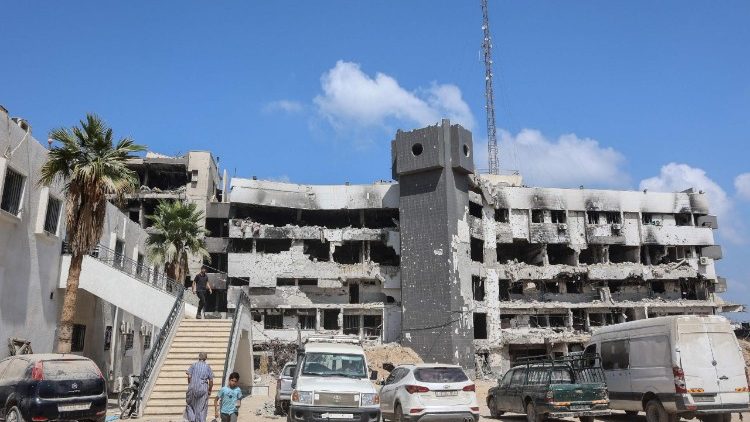
Gaza: 22 hospitals attacked since the beginning of the year
Vatican News
The United Nations and the World Health Organisation are raising fresh concerns over the worsening humanitarian situation in the Gaza Strip, where the healthcare system remains under severe strain despite the ceasefire that came into effect in October last year. According to international agencies, attacks on hospitals and medical facilities continue, while shortages of essential medicines and equipment leave thousands without adequate care.
Hospitals struggling to function
Since the beginning of 2026, the World Health Organisation has documented 22 attacks affecting hospitals and healthcare centres across Gaza. The incidents, reported by the UN Office for the Coordination of Humanitarian Affairs (OCHA), have caused casualties and further disrupted the already fragile medical network, hampering patient transfers and limiting hospital operations.
Today, only slightly more than half of Gaza’s hospitals remain partially operational, together with around 58 percent of primary healthcare centres. None of the facilities, however, is functioning at full capacity.
The consequences for civilians remain dramatic. Although a ceasefire has been in place since October 2025, violence has continued in various parts of the enclave. According to humanitarian agencies, at least 880 people have been killed and approximately 2,600 injured in the months following the truce.
Shortages deepen human suffering
Medical workers on the ground report critical shortages of oxygen concentrators, laboratory materials, orthopaedic supplies, and prosthetic devices. These shortages particularly affect the most vulnerable patients, including children and those suffering from severe trauma.
The WHO estimates that more than 43,000 people now require long-term rehabilitation care, among them nearly 10,000 children. Many are living with amputations, spinal injuries, burns, or traumatic brain injuries. Yet rehabilitation services remain extremely limited, as no specialised centre is currently able to operate fully.
Humanitarian organizations warn that more than 50,000 people urgently need prolonged recovery treatment, while the available services are overwhelmed by the scale of the crisis.

Aid access remains limited
International agencies also continue to denounce restrictions affecting the delivery of humanitarian assistance. According to the WHO, some medical materials are still categorized by Israeli authorities as “dual-use” items and therefore face delays or restrictions at border crossings.
In recent days, more than 180 pallets of medical supplies—including vaccines, refrigerated medicines, and hygiene products—were recovered at the Kerem Shalom crossing. Nevertheless, UN officials caution that Gaza’s healthcare system remains far from recovery.
Water crisis and humanitarian concerns
Alongside the healthcare emergency, the humanitarian situation continues to deteriorate. UNICEF reported distributing hygiene kits and water containers to approximately 116,000 people over the past week. Yet access to safe drinking water remains critically limited.
OCHA estimates that 98 percent of the water available in Gaza is unsafe for human consumption, while nearly 90 percent of the territory’s water infrastructure has been damaged or destroyed.
For this reason, the United Nations and humanitarian organisations renew their appeal for unhindered humanitarian access and the steady entry of medical and essential supplies. Only through the restoration of infrastructure, regular humanitarian corridors, and adequate security conditions, the agencies stress, will it be possible to respond effectively to the needs of a population that continues to endure the heavy burden of more than two years of conflict.

Thank you for reading our article. You can keep up-to-date by subscribing to our daily newsletter. Just click here.


