
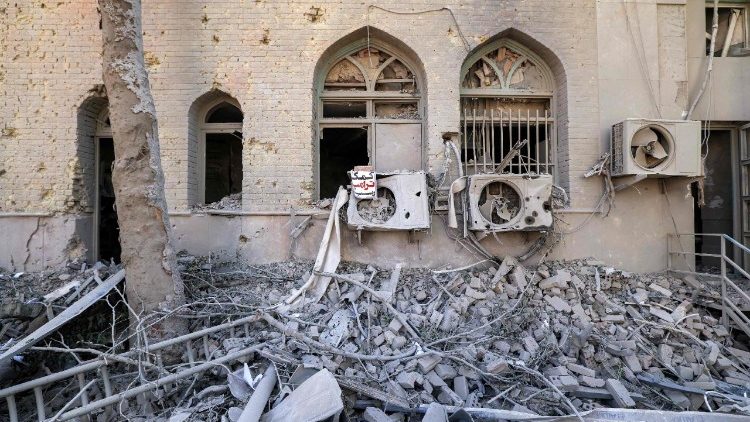
Iran braces for more attacks as death toll rises
By Nathan Morley
Iran is bracing for more attacks as death toll rises.
A US official has confirmed to CBS News on Tuesday that American forces conducted strikes on military targets on Iran's Kharg Island, it came as US President Donald Trump posted on Truth Social, warning: "A whole civilization will die tonight, never to be brought back again."
Earlier, Israel has warned Iranians not to travel by train, saying rail use “endangers your life,” as it confirmed a strike on a third petrochemical facility inside Iran.
The warning came after Trump threatened the “complete demolition” of Iranian infrastructure, saying the United States could “take out Iran in one night.”
President Trump has set a deadline of 00:00 GMT for Iran to reopen the Strait of Hormuz, though his previous deadlines have shifted.
More than 3,500 people have been killed in Iran since U.S.-Israeli attacks began, including at least 1,665 civilians, according to the U.S.-based human rights group HRANA.
The group said Monday marked the “highest rate of attacks” in 10 days, with 49 civilians killed.
Iran, meanwhile, has formally rejected a U.S. ceasefire proposal, state media reported.
Trade and energy strain
In other developments, the UN World Food Programme (WFP) has warned that the ongoing war has underscored just how vulnerable maritime routes are.
The UN World Food Programme warned that the war in the Middle East, along with continued attacks on commercial vessels in the Strait of Hormuz, has exposed the vulnerability of key maritime routes and the potentially deadly consequences for people who depend on humanitarian aid.
Trade and energy markets are already under strain, with potentially severe effects on developing countries.
Analysts say further escalation could trigger the largest disruption in the history of the global oil market.
The conflict is also driving up production costs for fertilizers, particularly nitrogen-based products that rely heavily on liquefied natural gas from Gulf states.
Rising costs are already pressuring agricultural output and productivity, with likely consequences for global food prices.
Shipping disruptions are compounding the problem.
Vessels are being rerouted to avoid attacks, increasing journey times and raising transport costs.
Humanitarian agencies say the delays are slowing the delivery of food and other essential supplies, making shipments more expensive and less predictable.
Thank you for reading our article. You can keep up-to-date by subscribing to our daily newsletter. Just click here.


