
IFAD President: Agriculture can be a tool for peace and hope
By Kielce Gussie
Around 2.5 to 2.6 billion people—about one third of the world’s population—depend on agriculture for their livelihood, according recent FAO data. Yet, due to a number of challenges, such as conflict, climate change, and lack of resources, many struggle with food insecurity.
One organization looks to the faces behind the numbers: the child in Sudan struggling to get enough food for the day or the young adult in Bangladesh searching for a job in a crisis.
The International Fund for Agricultural Development (IFAD) is present in 92 countries, working to implement projects and initiatives that advance prosperity, food security, and resilience in rural populations.
What sets IFAD apart from other development organizations is that it makes large investments and usually co-finances projects with governments, communities, and the private sector. This shared funding helps ensure that all partners take ownership and responsibility.
Invest in the first mile
IFAD’s work prioritizes “investing in rural people”. But it is a question that goes beyond simply producing enough food.
As the organization’s President, Dr. Alvaro Lario, explains, what is important is also making sure “these communities have access to the inputs, technology, storage facilities, and markets to be able to access credit, insurance, water, the right soil, and seeds.”
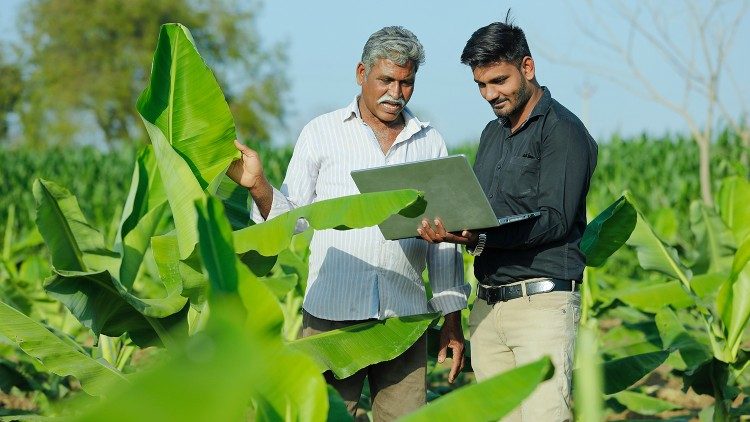
After meeting with Pope Leo XIV for a private audience on Thursday, Dr. Lario tells Vatican News that it’s not just about producing but about making sure that farming is a business.
The end goal is building a sustainable and positive future for people in rural communities—looking to feeding them for a lifetime and not just a day.
For IFAD, that means investing in the "first mile": the smallholder farmers and rural communities. Dr. Lario explains they are the ones producing the food. It does not mean focusing on just “receiving the food from the developed economies or from the ccities,"he says. It involves “a change of pperspective.”
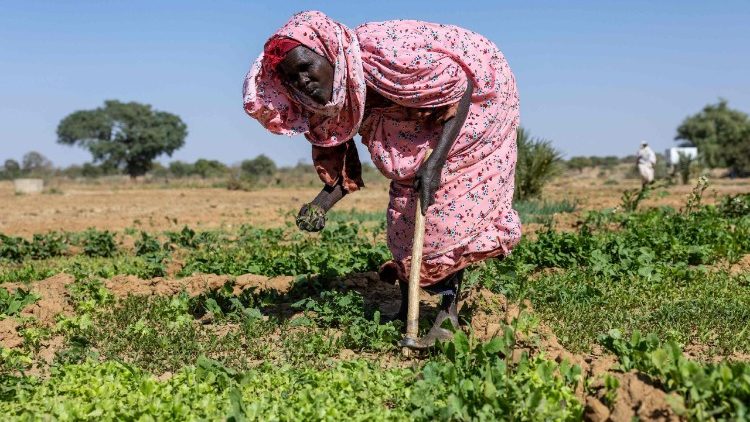
Priority and investment are given to the people who grow the food and care for the land. Without this support, men and women often struggle to support themselves, let alone grow enough food to sell and reap the benefits of their labor.
“Most of the poverty—extreme poverty—80% of it is in these rural areas,” Dr. Lario underlines. “We know that in developed economies, rural areas are usually underinvested.” Rather, the emphasis is placed on another sector.
But, agriculture, the IFAD President says, as a type of economic pproduction, is very important for these rural areas.
“We know,” he notes, “that agriculture actually is two to three times more effective in economic growth than other areas because a lot of communities and countries still very much depend on agriculture.”
That is why it is so essential to ensure that local supply chains should be set up so they can easily connect to wider regional and international markets.
A tool for peace
To combat the lack of funds in countries around the world, IFAD implements programs and initiatives specific to the needs of the people.
For example, in Sudan—where the world’s worst humanitarian crisis has unfolded—the organization has launched a project dedicated to small farmers improving food security, increasing incomes, and building resilience. Moreover, IFAD’s President explains that he has been meeting with members and ministers of the nation to discuss how to better the current situation.
He notes that working on producing and providing food is important, but another essential aspect is creating a place for people to hope for a better future “where they can continue working, producing, and having food available.”
In nations like Sudan, where violence and conflict have made it difficult to continue to provide aid, Dr. Lario points out the correlation between conflict and food insecurity. Conflict is “clearly a driver of hunger, a driver of poverty,” he says.
However, with a change of perspective and a more people-centered view of the world, agriculture could be a tool for peace. “For us, agriculture is one way to bring communities together, and can be a way of brokering, in many cases, peace, but also hope,” Dr. Lario stresses.
That does not mean political avenues should be abandoned. Voices like Pope Leo's can help draw attention to the ongoing situation in various countries.
A special connection for the Pope from the Americas
Turning to his audience with Pope Leo on January 15, IFAD’s President says he and the Pope spoke about transforming lives and the importance of bringing hope to people.
“The aspect of hope is especially important because it gives us all something to look forward to.” says Dr. Lario.

They discussed the work IFAD is doing in a number of communities in Peru where Pope Leo worked as a bishop. The Holy Father pointed out the struggle many rural communities face: “He said they were producing fantastic food, but then they were not reaping the rewards.”
This, Dr. Lario highlights, is the key part.
Yet, with IFAD’s on-the-ground initiatives and programs, the hope is that these communities will have the tools, access, and resources needed to provide not only for themselves, but for the communities that depend on them.
Thank you for reading our article. You can keep up-to-date by subscribing to our daily newsletter. Just click here.


