
Health data: Ethics and equity at the heart of research
Vatican News
“The growing role of health data and digital technologies in medicine raises important ethical questions that require reflection and cooperation at the global level. This meeting provided an important opportunity to promote a more equitable approach to biomedical research and healthcare.”
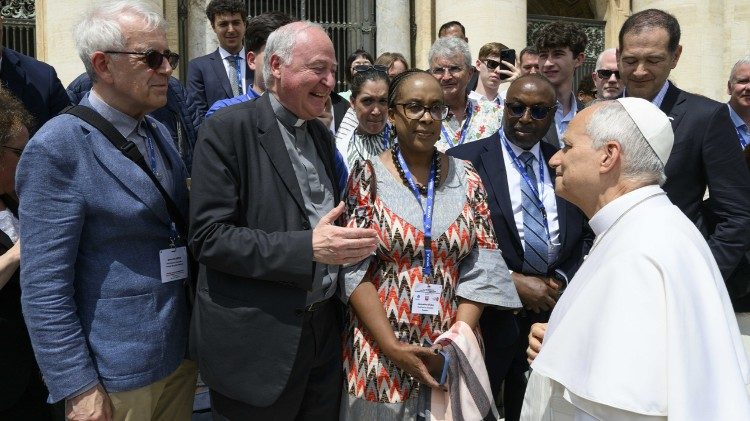
With these words, Archbishop Renzo Pegoraro, President of the Pontifical Academy for Life, described the Third Expert Meeting on the revision of the Declaration of Taipei on health data governance, held on 1–2 June 2026 in the St. Pius X Hall of Vatican City. The meeting was organised by the World Medical Association (WMA) in collaboration with the Pontifical Academy for Life and the Israeli Medical Association
Assessing fairness in the collection and use of patient data
According to the organisers’ final statement, the meeting brought together international experts in medicine, bioethics, law, public health, and healthcare governance. Discussions focused particularly on fairness in the collection, storage, access, and use of health data and biological samples.
Participants examined the underrepresentation of vulnerable and marginalised populations in research, the equitable distribution of research benefits, meaningful stakeholder involvement in ethical decision-making, and governance mechanisms that promote justice and global solidarity.
Medical Innovation grounded in ethics and equity
Opening the meeting, Dr Jacqueline Kitulu, President of the World Medical Association, stressed the importance of ensuring that medical innovation remains rooted in ethics and equity.
“Health data and biobank research,” she said, “hold enormous potential to improve healthcare and scientific knowledge around the world. However, scientific progress must go hand in hand with ethical responsibility, meaningful inclusion, and the fair sharing of outcomes to ensure that all communities benefit equally.”
The Declaration of Taipei
Originally adopted by the World Medical Association in 2002 and revised in 2016, the Declaration of Taipei provides ethical guidance on the use of health databases and biobanks.
As advances in artificial intelligence, genomics, data-driven medicine, and cross-border data sharing continue to reshape healthcare and medical research, the WMA has launched a revision process to ensure that the Declaration remains aligned with contemporary global realities and emerging ethical concerns.
Serving patients through international cooperation
The Vatican meeting marked the third open expert consultation in the ongoing revision process, following the first consultation held in Taipei, Taiwan, in December 2025, and the second in São Paulo, Brazil, in March 2026.
“The collaboration of physicians from around the world,” the joint communiqué concludes, “demonstrates that, even in times marked by conflict, humanity can come together in the service of patients’ health and well-being. We hope that this spirit of cooperation will contribute to greater understanding and peace.”
Thank you for reading our article. You can keep up-to-date by subscribing to our daily newsletter. Just click here.


