

Ceuta Church strengthens support amid migration emergency
By Sebastián Sansón Ferrari and Linda Bordoni
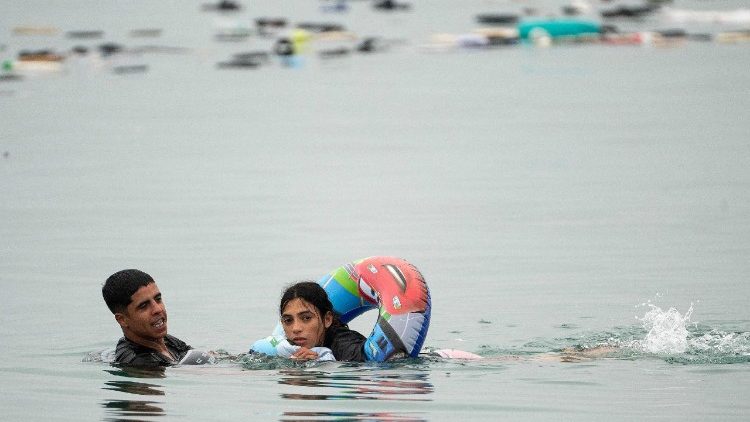
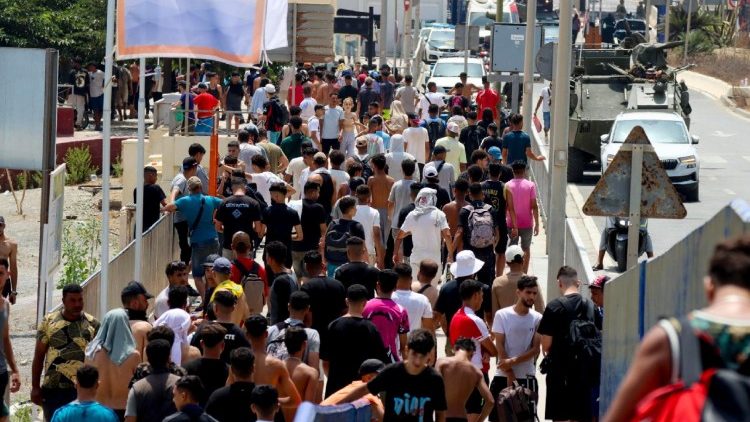
About 60,000 migrants entered the Spanish autonomous city of Ceuta from Morocco over the past 24 hours, according to Ceuta's President, Juan Jesús Vivas, speaking on Friday. The figure is equivalent to around 70 per cent of the city's regular population. At least 34 migrants have died while attempting the crossing, highlighting the growing human cost of the unfolding crisis.
Located on the northern coast of Africa and bordering Morocco, Ceuta has for decades been one of the principal entry points into Europe for migrants.
In recent days, the growing number of arrivals has led to scenes of thousands of people scaling the border fence or attempting to swim to the Ceuta shoreline from the El Tarajal breakwater. Reception facilities remain overwhelmed.

Deployment of Armed Forces
In response to the scale of the emergency, the Spanish Government ordered the deployment of members of the Armed Forces to reinforce security and support the Civil Guard.
At the same time, the President of the Autonomous City of Ceuta appealed to the central government for urgent assistance, warning that the city's capacity to respond had reached its limits.
Among those who have arrived are many unaccompanied minors, adding further complexity to reception and protection efforts.
Moroccan forces meanwhile reportedly beat back crowds with batons and tear gas at the gates to Ceuta, trying to prevent more from storming across into the tiny Spanish territory that juts on a sliver of sandy land into the Mediterranean from Morocco.
Diocese of Cádiz and Ceuta
Against this backdrop, the Diocese of Cádiz and Ceuta has voiced its "deep concern" over the unprecedented surge in migrant arrivals.
In a statement released on 30 July 2026, the local Church expressed its closeness to all those affected by the crisis and reaffirmed its readiness to work alongside public authorities in responding to the humanitarian emergency.
As an initial concrete measure, the Diocese announced that all collections taken this weekend in Ceuta's parishes will be allocated to the Diocesan Office for Migrants. The funds will be channelled through the San Antonio Migrant Assistance Centre, which will address the most urgent needs in coordination with the relevant services.
Diocesan sources explained that, for the time being, the local Church's resources remain limited and that it is awaiting further guidance from the unified command established by the Government of the Autonomous City to coordinate the emergency response.
Nevertheless, they stressed that the Diocese stands ready to place all of its available humanitarian resources at the disposal of the authorities and to respond to whatever needs arise as the situation develops.
Appeal for support and prayers
The Diocese concluded by thanking the faithful and all people of goodwill who wish to support the initiative.
It also invited Christian communities to intensify their prayers for all those suffering the consequences of this crisis, for the authorities entrusted with managing it, and for everyone working to build paths of peace, justice, and hope.
Thank you for reading our article. You can keep up-to-date by subscribing to our daily newsletter. Just click here.


