
Chilean Bishops call for ‘a greater ethic of dialogue’ in midst of unrest
By Kielce Gussie
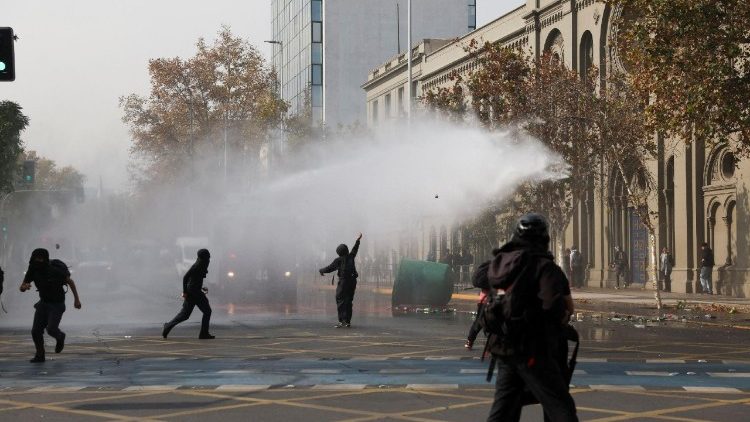
Just two months ago, Chile’s new president was sworn-in. Over the last few weeks, police and student protesters have clashed over new policies try to limit access to free higher education.
The country has also been facing emergency situations due to wildfires and growing migration challenges.
In response, the Permanent Committee of the Bishops' Conference of Chile released a statement on May 13 titled, “Restoring Social Peace and Political Dialogue.”
Broken down into six points, the statement highlighted social peace, authorities’ moral responsibility, the deterioration of public life, the importance of dialogue, the impact of the current situation on the country, and the need for spiritual renewal.
Peace leads to a future
“Social peace is not merely the absence of violence, but the fruit of justice, mutual respect, and the sincere willingness to seek the common good together.” This is the first point the committee made in their statement, stressing that no country can hope to achieve true development if “civic coexistence is eroded by constant division, hostility, or mutual contempt.”
Turning to the words of St. Augustine, the committee pointed out that peace in a city comes from the “ordered harmony of its citizens” (De civitate Dei, XIX, 13).
When harmony is fostered, the city’s moral, spiritual, and cultural foundations are fortified. On the other hand, when this harmony is lost, its future is threatened.
A grave moral responsibility
The Bishops highlighted the grave moral responsibility public authorities hold to “safeguard through their conduct the dignity of civic life.” Moreover, legislators are called to be examples of prudence, respect, and integrity.
The committee noted how, at the moment in Chile, people are growing concerned about the “current level of hostility” found in the country's institutions.
In Caritas in veritate 17, Pope Benedict XVI offered the reminder that “integral human development presupposes the responsible freedom of the individual and of peoples.” Therefore, public service is an “ethical expression of a vision of society”, the Committee continued.
Highest expression of service
With the current political and social situation in Chile, the Bishops explained how it is both painful and “a cause of justified scandal for citizens—especially for our youth,” to see those in power embroiled in arguments, personal attacks, and vulgar language. This, the committee stressed, damages both the personal office and contributes to discrediting institutions.
Still, politics have an important role in society. It is the “highest expression of service and love for others” and involves differences in opinions and ideas.
As a result, the Committee of the Bishops' Conference highlighted the need for a greater ethic of dialogue. Looking to find a consensus is not a weakness but shows “political maturity and love for one’s country.”
Violence is both physical and ideological
Whilst physical violence can be seen in societies around the world, the Chilean Committee argued that verbal, ideological, and strategic violence can also negatively affect a community. It “undermines social solidarity because ‘without truth, without trust, and without love for what is true, there is no social conscience and responsibility’” (Caritas in veritate, 5).
Lastly, the Bishops warned that without recovering “a profound sense of the dignity of others and respect for differing ideas”, institutional change or progress will be impossible.
Coexistence in a society is based on the commandment “You shall love your neighbor as yourself” (Mt 22:39). Without this, the basic foundation is lost.
To avoid this, spaces must be made for reflection, interior silence, ethical formation, and spiritual life because, the committee argued, “only a heart formed in charity and solidarity can sustain a truly humane society.”
The Chilean Bishops ended their statement asking that, through the intercession of the Blessed Virgin of Carmen, “social and political peace may prevail in Chile, and that love of neighbor may become the true law guiding our decisions, especially those of all who are called to lead the destiny of the nation."
Thank you for reading our article. You can keep up-to-date by subscribing to our daily newsletter. Just click here.


