
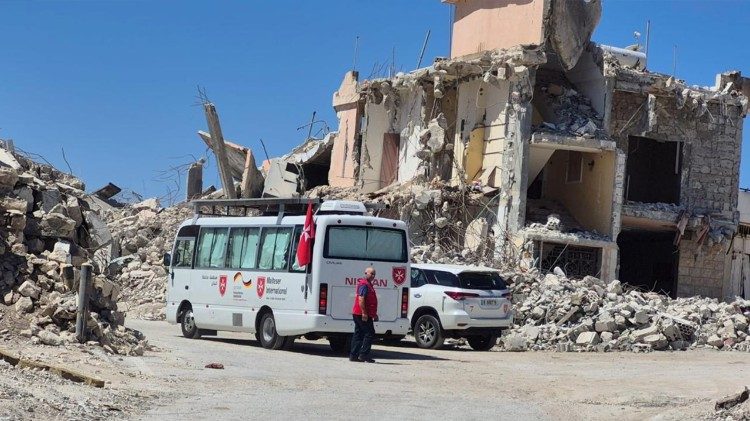
Order of Malta Lebanon responds to renewed displacement crisis
By Augustine Asta and Linda Bordoni
Amid the escalating Israeli and U.S. strikes against Iran and counter-strikes by Iranian forces, Israeli strikes targeting Hezbollah in Lebanon have killed almost 300 people had injured 1,000 others in the first eight days of the war.
Over 500,000 have been forced to flee their homes.
Amongst the humanitarian agencies working to support the population is the Order of Malta Lebanon.
Speaking to Vatican Radio, Oumayma Farah, Director of Development and Communications of the Order of Malta Lebanon, said the people they are assisting are afraid, distressed and incredulous to have to go through this ordeal yet again.
She also explained that aid workers are struggling to meet the needs of a displacement and uncertainty crisis that is playing out in a situation in which tens of thousands had already been uprooted from previous escalations.
“Today, Lebanon is facing once again a massive crisis, a crisis of displacement due to an unwavering war that is hitting the country once again,” Farah said, noting that the current situation comes less than two years after the conflict of 2024.
According to Farah, the situation escalated sharply following a call last Thursday evening for residents to evacuate large areas of Beirut’s southern suburbs, in addition to villages in southern Lebanon.
“This is the first time that there has been a call to empty an entire area, and not just one or two neighbourhoods,” she explained. “It has led to the displacement of around 500,000 people, many of whom suddenly found themselves on the streets without knowing where to go.”
Chaos and fear
She described chaotic scenes as families tried to flee bombardments, noting that “The roads were blocked for several hours while the shelling began.”
“The situation on the ground is really appalling,” she said.
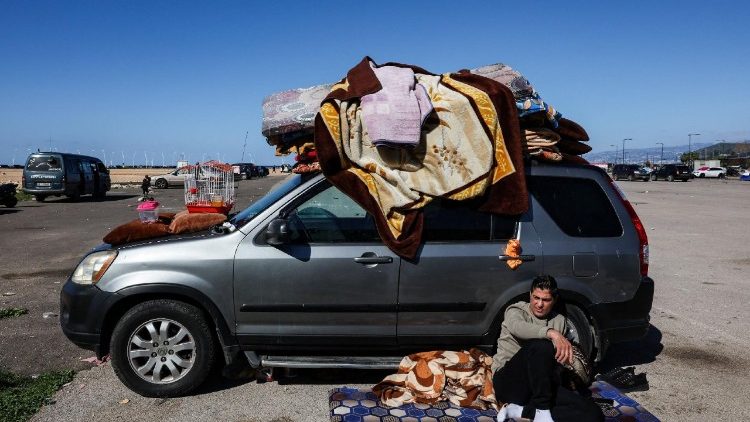
Many displaced families, she said, are still sleeping in their cars. Others remain reluctant to enter shelters due to difficult experiences during previous conflicts. At the same time, many who did seek refuge have returned to the very same shelters they occupied two years ago.
For the humanitarian teams working on the ground, the recurrence of the crisis is particularly painful.
“It was heartwarming, but at the same time heartbreaking, to see the same faces - the same families, the same children - who were displaced two years ago and who today are displaced all over again,” Farah said.
“Why is this happening again?”
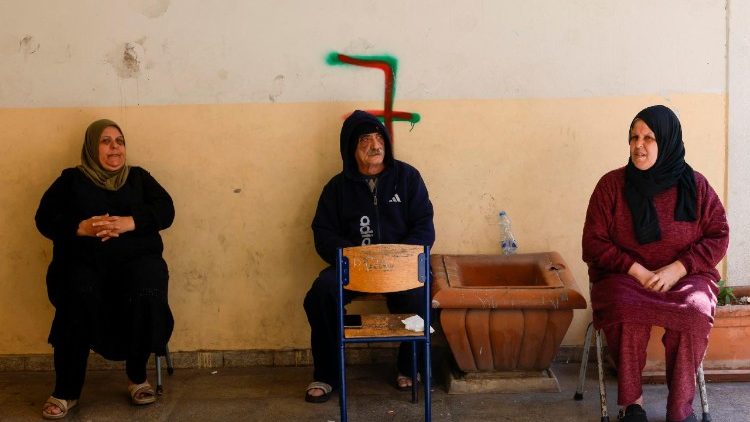
She said the emotional toll on the population is evident. “People have a lot of anger, a lot of sadness, and many questions. They ask: ‘Why is this happening again?’”
The Lebanese, she reiterated, do not deserve so much pain and suffering.
The Order of Malta’s service in Lebanon
During the 2024 conflict, the Order of Malta Lebanon supported operations in around 80 shelters across the country. Today, its teams are once again mobilising to meet the growing needs.
“As the shelters are assigned to us by the Ministry of Social Affairs and the Ministry of Public Health, we are redeploying our staff and our teams,” Farah explained.
One of the organisation’s strengths, she said, lies in its established presence across the country.
“We are already geographically present across Lebanon, from the extreme north to the extreme south, in the Bekaa and near Beirut,” she noted. “Our network of around 60 projects and programmes provides a strong foundation that allows us to respond quickly to this massive crisis.”
In southern Lebanon, the organisation operates community health centres and mobile medical units that normally cover around 40 villages, including several near border areas. However, ongoing bombings and destruction are forcing teams to constantly adjust their operations.
Adapting to the needs
“We must redeploy according to the villages that are no longer accessible or to the areas where displaced people are gathering,” Farah said. “We have to adapt continuously according to the needs.”
Despite the challenges, she highlighted the dedication of staff and volunteers.
“Our teams are deeply committed to the mission of the Order of Malta Lebanon: service to the poor and the sick, as well as the protection of the faith”.
“This is the moment for us to remain strong, to continue believing in our mission, and to respond to the growing needs,” she said.
As of now, around 500,000 people have been registered as internally displaced persons in Lebanon, but she said, there are many more who have not registered.
Of these, approximately 117,000 are currently living in shelters, and others have taken refuge in what authorities consider safer areas or with relatives and friends.

Health care
Farah said that the needs among displaced communities are extensive, so humanitarian teams are providing medical consultations, essential medications - particularly for patients with chronic conditions - as well as mental health and psychosocial support.
“We are also distributing hygiene kits, psychosocial kits for children, and winterisation kits,” she said, noting that “children are among those most deeply affected by this crisis.”
Food and shelter
Food assistance is also a priority, with the organisation providing hot meals and food parcels to families struggling to meet basic needs.
Many shelters, she explained, are schools converted into temporary accommodation.
“Every classroom becomes a small space where at least 10 to 12 people sleep on the floor,” she said. “Families share bathrooms and cooking areas for the entire floor, so hygiene becomes a critical concern.”
Uncertainty
For many Lebanese, however, the greatest burden is uncertainty.
“The situation is extremely difficult,” Farah said. “And the most troubling part is that people do not see the end of the tunnel. This is creating a great deal of despair and anger among both the displaced families and the communities hosting them.”

Thank you for reading our article. You can keep up-to-date by subscribing to our daily newsletter. Just click here.


