
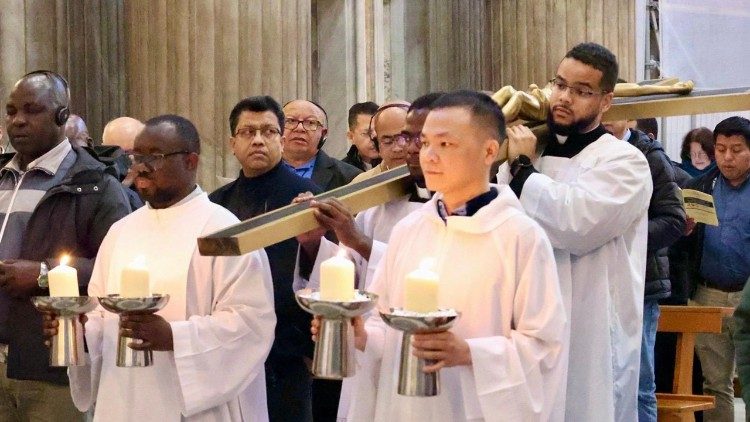
Two centuries of grace: Celebrating the Oblate Constitutions and Rules
By Fr. Bonga Majola, OMI
Two hundred years ago, in the heart of Rome, a quiet moment of grace changed the future of what was then a small missionary family. On February 17, 1826, Pope Leo XII approved the Constitutions and Rules of the Missionary Oblates of Mary Immaculate (OMI). What began as the fragile hope of a handful of missionaries became, in that moment, a recognized gift of the Holy Spirit for the whole Church.
When Eugene de Mazenod travelled to Rome, he carried with him not only documents but the hopes of a young community that had already faced opposition and uncertainty. He knew that papal approval was essential, yet he hesitated to present himself as the founder of a religious family.
It was Father Carlo Albini, a young member of missionaries, who encouraged him to go forward with confidence. Rome then became a place of deep prayer for Eugene, San Silvestro al Quirinale his home, the city’s churches his refuge, and the tomb of St. Peter the place where he entrusted the Rule to the Apostle.
For the Oblates, the Constitutions and Rules have never been a mere administrative text. They are a spiritual inheritance, a path of holiness, and the clearest expression of the charism entrusted to them by the Spirit. Eugene called them his “treasure,” the instrument through which he transmitted his experience of God.
For two centuries, they have guided the Oblates to the most difficult missions, earning from Pope Pius XI the title “missionaries of the most difficult places.” This anniversary invites the entire charismatic family to remember that fire, and to ask whether we still dare to be known for that same audacity.
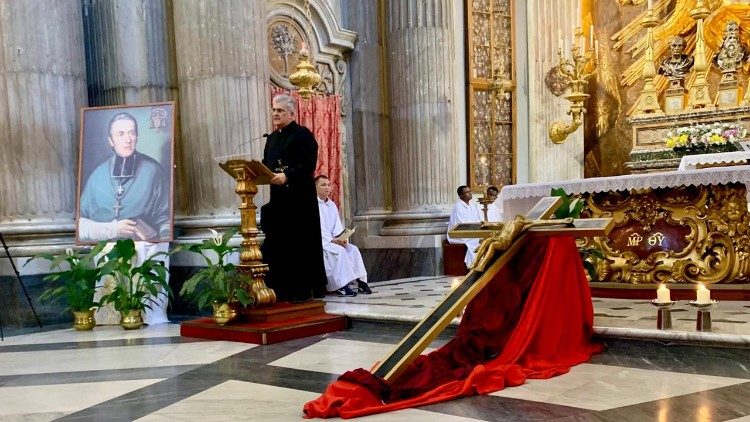
To mark the bicentennial, the Oblate family returns to the very places where the story began. The week opened on Sunday, February 15, in the church of Santa Maria in Campitelli, where Eugene once prayed anxiously while the Cardinals deliberated. There, the family gathered for a Service of the Word, recalling the morning when Eugene attended nine Masses, entrusting everything to God.
The following day, Monday, February 16, the celebration moved to San Silvestro al Quirinale, the house where Eugene lived during the months of the approval process. A Mass of the Holy Spirit, presided by Bishop Guillermo Steckling, OMI, brought together the entire Oblate family. The liturgy, prepared with care, echoes the same trust that sustained Eugene in 1826.
That afternoon, the Oblates connected with the wider world through a global gathering: a presentation on the significance of February 17, a message from the Superior General, and reflections from the presidents of the five Oblate regions—Africa-Madagascar, Asia-Oceania, Canada-US, Latin America and Europe—on the challenges and hopes of living the Constitutions and Rules today.
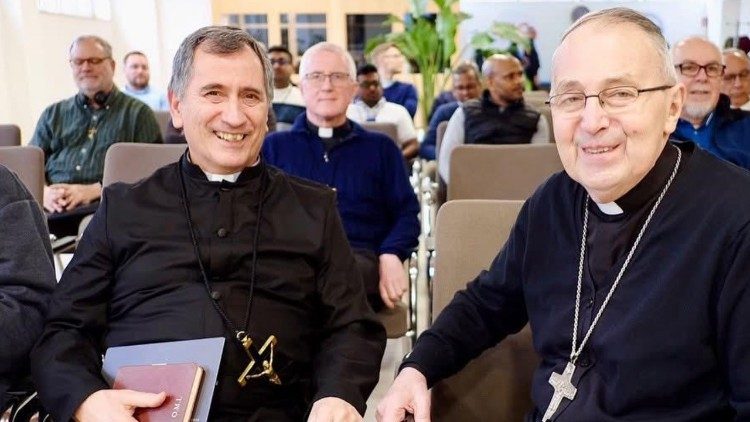
On Tuesday, February 17, the anniversary itself, the General House became a place of reflection and prayer. The morning began with solemn prayer in the chapel, followed by a meditation on Father Carlo Albini and the Constitutions and Rules, an invitation to rediscover the spiritual depth that shaped the first Oblates. Personal prayer before the Blessed Sacrament and small‑group sharing allow participants to enter the anniversary not only historically but spiritually.
That afternoon, the celebration reached a high point with a Mass celebrated by Cardinal Luis Antonio Tagle, Pro-Prefect of the Dicastery for Evangelization, honoring the exact day on which the Church approved the Oblate Rule two centuries earlier.
Throughout the week, the rhythm of prayer continued. On Ash Wednesday, the Oblate family gathered for a communal penitential service with the distribution of ashes, a moment that invited everyone to enter Lent with the same humility and trust that marked Eugene’s own journey of discernment in Rome.
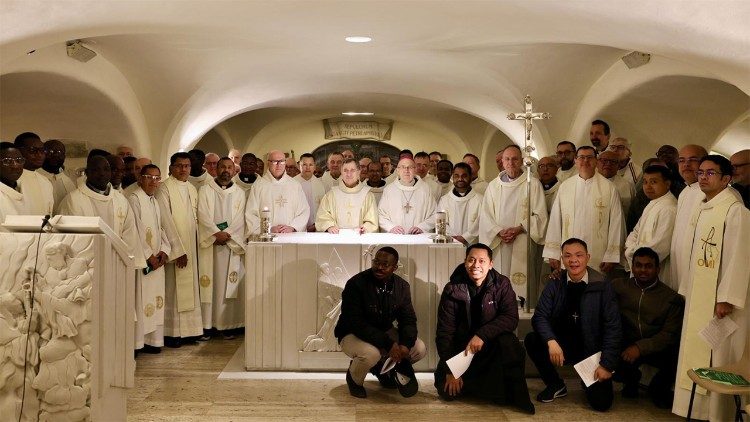
On Thursday morning, the Oblate family gathered at the tomb of St. Peter for Mass presided by the OMI Superior General, Fr. Luis Ignacio Rois Alonso, followed by prayer at the tomb of Pope Leo XII, the Pope who recognized the hand of God in the Oblate charism. The day also included a remembrance of the Dogma of the Immaculate Conception, a mystery so central to the Oblate identity.
On Friday, the community set out on a pilgrimage through the streets of Rome, retracing the steps of St. Eugene and visiting places that shaped his spiritual vision, including the rooms of St. Ignatius. The pilgrimage culminates on Saturday morning with an audience with the Holy Father, a reminder that the Oblates continue to serve the Church from its heart to its peripheries.
Two centuries after that decisive February evening, the grace of 1826 continues to bear fruit in every corner of the world. The Constitutions and Rules remain a living guide, calling the Oblates to holiness, unity, and missionary daring.
To celebrate this anniversary is to remember with gratitude, to live today with passion, and to open ourselves to the future with hope, just as Eugene did when he placed his Rule on the altar of St. Peter and entrusted everything to God.
Thank you for reading our article. You can keep up-to-date by subscribing to our daily newsletter. Just click here.


