
Church in Cuba: Sign of comfort as people long for dignified life
By Johan Pacheco
The Cuban population continues to endure the effects of the energy crisis, which has worsened the many problems already affecting society. “We are here — and we’re not sitting back doing nothing,” Fr. Ariel Suárez Jáuregui told Vatican News. He is Assistant Secretary of the Cuban Conference of Catholic Bishops and parish priest of the Diocesan Shrine and Minor Basilica of Our Lady of Charity of El Cobre in Havana.
“Food prices are rising. Medicines are scarce, medical services have been reduced, and surgeries are limited only to those whose lives are in danger. Access to drinking water has become more difficult because many people depend on water trucks, and without fuel, they cannot reach them,” Fr. Suárez explained.
In this context, the Church — poor and among the poor — offers a pastoral ministry of charity and consolation. “It is in the area of charity that we are perhaps being renewed and continually growing, as we see increasing needs and experience the Lord’s call to serve Him in the poor,” he said, recalling the many assistance efforts carried out — often with great difficulty — for the most vulnerable.
The Church in Cuba has expressed its gratitude for the paternal closeness of Pope Leo XIV during this time. The bishops had hoped to meet him during their ad limina visit, but it had to be postponed. “We are deeply thankful for the affection the Pope has shown for the people of Cuba and for its Church. The Holy Father’s voice has amplified for the world the sorrowful yet hopeful voice of the Cuban people,” Fr. Suárez noted.
As parish priest of the Diocesan Shrine and Minor Basilica of Our Lady of Charity of El Cobre in Havana, Fr. Suárez hopes that during this Lent — even in the midst of many challenges — the Cuban people will look to Jesus with hope. “May the pain of my people, which is also my own, not make us resentful, violent, or wounded. May we always love, proclaim the victory of love, and bear witness to the Lord’s love,” he shared in prayer.
We are living the liturgical season of Lent, a journey toward Easter and therefore a time of hope for Christians. We know that in recent weeks, Cuba has faced greater complications. How is the Church confronting this reality in the light of Christian hope?
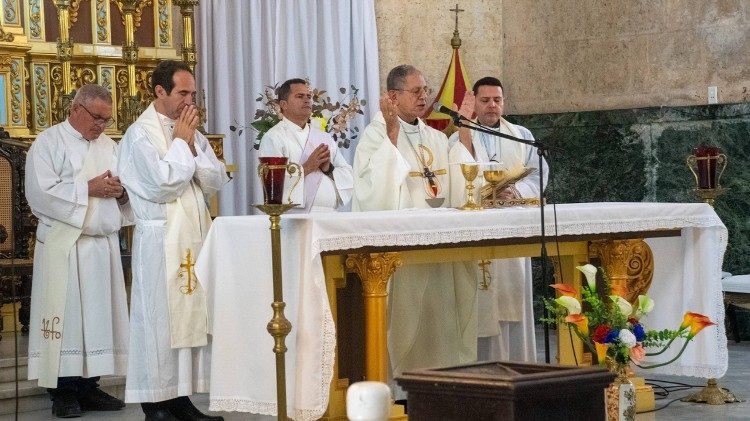
Precisely because the Church lives by trusting in Christ’s promises, wherever possible, we continue proclaiming the Gospel, celebrating the Sacraments, teaching catechism to children, visiting the sick and prisoners, and preparing adolescents, young people, and adults in the catechumenate and other formation programs. Couples continue their marriage preparation and workshops on family life. Our Formation Centers remain active. Charitable initiatives in parishes and communities are multiplying.
During Lent, opportunities are offered for retreats, penitential celebrations, and praying of the Way of the Cross, especially on Fridays. However, in rural areas or those far from parish centers, activities have had to change because many priests or catechists cannot reach those places due to lack of fuel.
Not everyone is young and strong enough to travel long distances by bicycle under the tropical sun. Some roads are impassable. Returning at night without electricity is also dangerous. We do what we can. But we are here — and not standing idly by.
In a January 2026 message, the bishops warned of the risk of social chaos and violence due to restrictions on oil supplies to the country. What is the current situation, and what concerns weigh on the Cuban people?
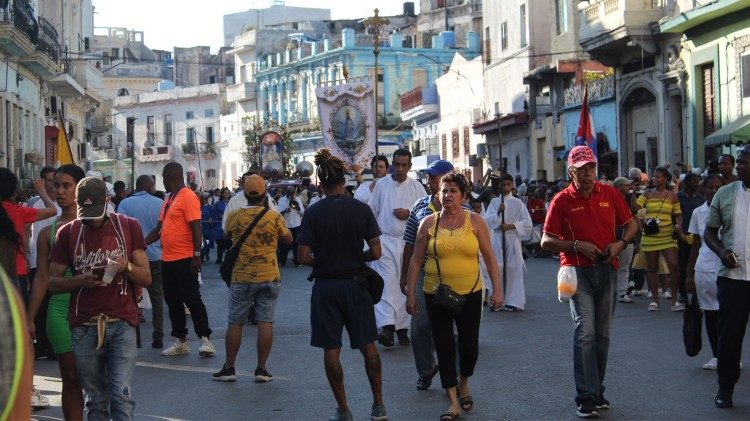
The current situation is frankly difficult. Public and private transportation is decreasing on streets and highways. Towns and cities seem deserted after sunset. Garbage overflows in Havana’s streets, literally blocking pedestrians and the few vehicles still on the road. The number of poor people, homeless individuals, and abandoned elderly continues to grow. We also see adolescents and young people turning to drugs.
Work and school hours are being reduced. Those employed in tourism fear losing their jobs. Food prices are rising. Medicines are scarce, medical services have declined, and surgeries are reserved only for life-threatening cases. Access to drinking water is increasingly difficult because many depend on tanker trucks that cannot operate without fuel.
Those with greater resources are quickly installing renewable energy sources in their homes and businesses, or purchasing vehicles and means of transport that do not depend on fuel. The Cuban people are facing this situation with pain and sadness. They feel they have already suffered so much in recent decades, and they long for something different — a dignified and happy life in their own land.
Some respond with violence, allowing greed, selfishness, and ambition to surface. Others, however, offer a beautiful and radiant witness of generosity, fraternity, and altruism in every sphere of national life. At the same time, there is a widespread feeling that “something has to happen, because we cannot go on living like this.”
A few weeks ago, during an Angelus address, Pope Leo XIV expressed concern for Cuba and encouraged dialogue to avoid actions that would increase people’s suffering. What has this closeness meant for the Cuban Church?
The Holy Father’s words at the Angelus on February 1 were received as a paternal gesture of communion and support. He emphasized the need for a “serious and effective dialogue” to alleviate “the suffering of the beloved Cuban people.” Pope Leo also expressed support for the Cuban bishops, who had issued an important and prophetic message on January 31 in light of the country’s worsening situation.
We are very grateful for the affection the Pope has shown the people and the Church. The Holy Father’s voice has amplified for the world the sorrowful yet hopeful voice of the Cuban people.
The situation has even led the bishops to postpone their trip to Rome. What are the main pastoral and social actions being carried out in the dioceses and parishes?
The pastoral actions of the Church are the same ones being carried out throughout the world. But now, among us, these familiar actions take on a special tone — one marked by closeness, compassion, and tenderness. Our Church, through its pastoral workers, dedicates time and resources to listening, visiting, accompanying, and offering consolation.
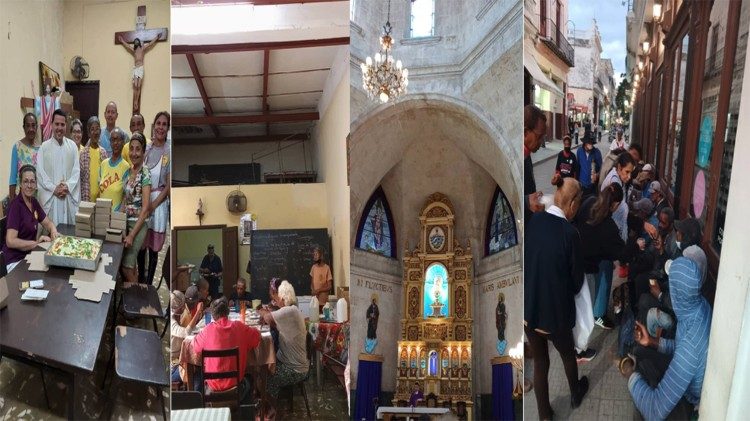
It is in the realm of charity that we are perhaps being renewed and growing, as needs increase and we feel the Lord calling us to serve Him in the poor. Many parishes are organizing soup kitchens for the elderly and vulnerable. Others cook meals and deliver them to homes. Prepared food is also distributed to those living on the streets, in parks, or in public squares.
Groups such as the John XXIII Movement, the Community of Sant’Egidio, and Communion and Liberation are also engaged in this work. Caritas organizations from other countries also often help sustain these initiatives.
Special mention must be made of the heroic, quiet, and extraordinarily generous service of religious sisters and brothers who run homes for the elderly or for the mentally ill. They face all the country’s difficulties, often without staff, because employees cannot reach their workplaces due to lack of transportation.
What particular testimonies can you share about efforts to care for the poorest amid the general difficulties?
In the parish where I have served as pastor for eleven years, we provide weekly lunches for about 150 elderly adults. Every Thursday afternoon, milk, a sandwich, and some protein are brought to 100 homeless individuals. Twice a month, Saturday lunches are prepared and delivered to the vulnerable.
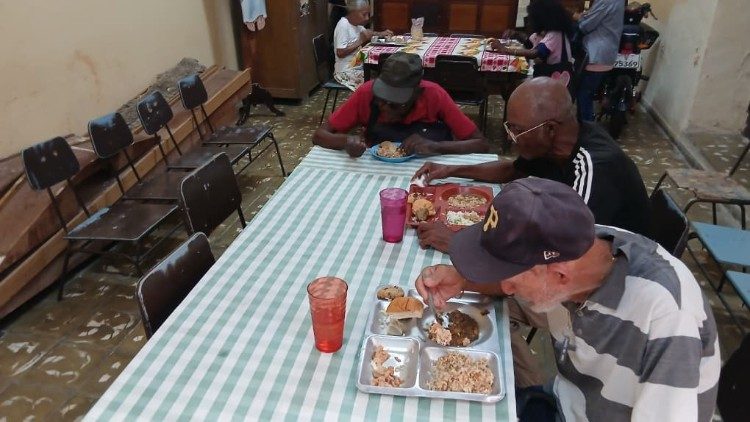
I want to highlight the joy and love with which the volunteers serve. They too have their own problems and needs. Yet they give their time and energy to the Lord and to their brothers and sisters, sharing what they have. They do so with a smile and treat the poorest with great respect.
I speak of my parish because it is what I know best, but similar initiatives exist in many parishes across Cuba, and there are also beautiful efforts within non-Catholic Christian communities. We thank God for all He has inspired in us during these difficult times. May the Lord help us never grow weary of doing good.
What is your message in light of the reality Cuba is experiencing, and what is your prayer on the journey toward Easter?
During Lent, we face the challenge of a God who chose to give everything — to give Himself completely, loving us to the end. It is tempting to remain focused on the “why” of the cross, of suffering and pain. Jesus taught us to ask “for what purpose.” When we look at the prolonged suffering of the Cuban people and of so many peoples around the world, we must look to the Lord.
Jesus taught us to love and to give our lives, thus filling suffering with meaning and passing through it toward the radiant morning of Easter. May the pain of my people, which is also my own, not make us resentful, violent, or wounded. May we always love, proclaim the victory of love, and bear witness to the Lord’s love. As Pope Leo XIV said in his first Urbi et Orbi message: The Risen One has shown that “evil will not prevail.” That is the reason for our love and our hope. Thank you.
Thank you for reading our article. You can keep up-to-date by subscribing to our daily newsletter. Just click here.


