
Bolivia: Idente Mission offers hope for younger generations in rural outskirts
By Eleanna Guglielmi
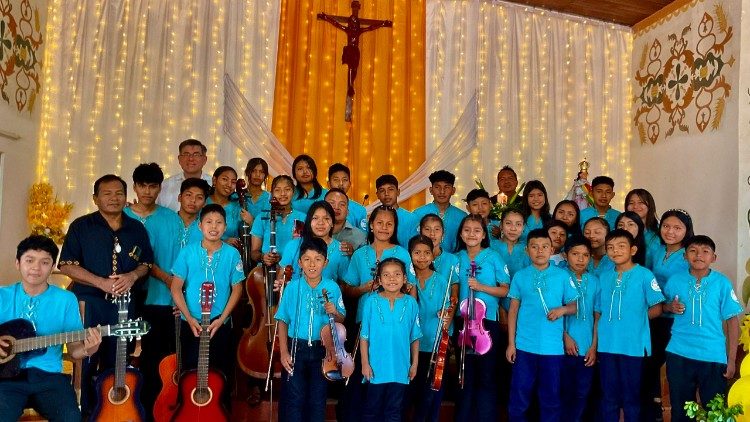
Part of the Jesuit legacy that intertwined faith, art and music, the Mission of San Miguelito in Chiquitanía, Bolivia, dates back to 1998, when Identes missionaries took over the management of a former agricultural college founded in the early 1960s for children of farmers.
The college was turned into a ‘monastic city’ and trained hundreds of young people in technical and humanistic disciplines for decades.
There is a youth orchestra that preserves Chiquitano music, a football school, after-school programmes, a training institute, university scholarships, and projects to protect the forest and traditional medicine.
A mission intertwined with human development, where holiness is measured in small steps every day.
Dignity that begins in the classroom
“Many children at the school do not know how to read or write,” says Amy Barilla, an Idente missionary. “This is why after-school programmes are not a luxury but a matter of dignity: giving these children a chance to start from the same point as everyone else.”
Many children between the ages of 5 and 13 are severely behind in their reading and maths, due to malnutrition, poor stimulation, and lack of family support.
In adolescence, the number of school dropouts increases, fueled by poverty, domestic violence, and child labour.
Multi-grade classrooms, which lack resources and strategies, widen the gap. Scattered villages, fragile agricultural fields, and monocultures that are vulnerable to drought make everyday life even harder.
Faith becomes a profession and a livelihood
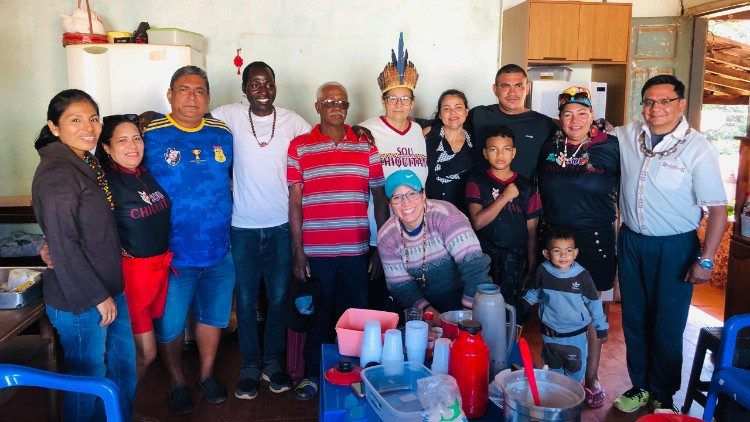
“Our dream was to accompany younger generations without losing the roots of their identity,” says Deisy Choque.
The Coro y Orquesta San Miguelito Music School welcomes 35 children and teenagers from six villages: violins, guitars, and cellos become instruments of personal growth and cultural belonging.
“Cello has helped me grow, and now I dream of going to university,” says Maria Laura, one of the students. Alongside music, the football school involves around 250 young people, transforming sport into an opportunity for discipline and the prevention of social risks.
“On the pitch, we learn respect and friendship: it’s like a second family,” says Milos.
With a permanent training institute, the missionaries offer courses in crafts, sustainable agriculture, and traditional medicine, with a particular focus on women’s autonomy.
“For us, holiness also means bread, school, and dignity,” reiterates Deisy Choque.
“Faith is not proclaimed with words alone, but when a family has food to eat and a child finds the strength to continue studying,” according to Jean Djeling.
Roots that shape the future
Chiquitanía still bears the mark of the Jesuit missions, which, since the 17th century, have given rise to a unique and resilient culture: processions, songs, and patron saint festivals continue to mark community life.
“Protecting our land is part of our faith,” emphasizes Milos. “The dry Chiquitano forest is not just nature: it is memory, culture, and life for those who live here,” which is why the mission promotes forest conservation, environmental education, the revival of traditional medicine, and sustainable agricultural practices.
At the same time, there is a growing commitment to digital communication to raise awareness of San Miguelito’s work and attract support from universities, volunteers, and benefactors.
Holiness a shared destiny
“Holiness is not a distant ideal, but a daily possibility that is reflected in study, work, and community life,” say Amy and Deisy.
The experience enriches not only the communities, but also those who dedicate themselves to it.
“Every time a young person from Chiquitanía receives a scholarship, it is as if the whole community had been accepted to university,” adds Jean. “We don’t just educate individuals: we invest in the collective future.”
The dispersion of communities, the shortage of priests, the fuel crisis, and the lack of services remain daily obstacles.
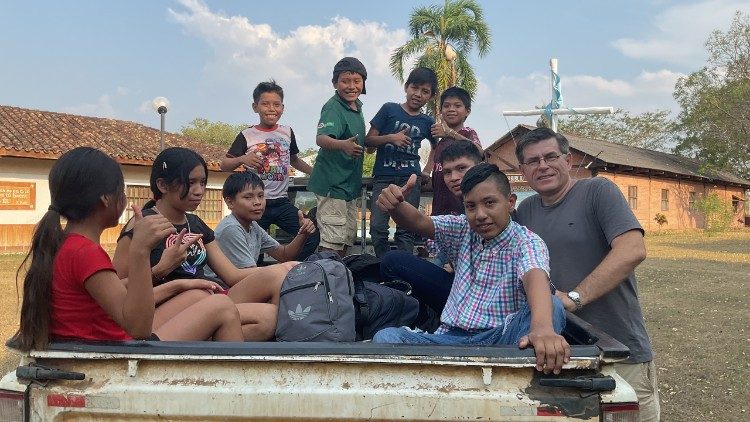
“We often have to reduce the number of trips children make to San Miguelito, and it is we who travel to the villages,” explain the missionaries.
Yet, they remain focused on the future: “With faith, commitment, and solidarity, even a remote land can become a source of hope for the future.”
Thank you for reading our article. You can keep up-to-date by subscribing to our daily newsletter. Just click here.


